Yes, in many cases, you can build a padel court on an existing tennis court.
This is one of the reasons padel has become attractive to existing tennis clubs, hotels, resorts and sports facilities. Instead of developing a completely new site, an existing tennis court may provide a suitable starting point for a padel court installation.
However, an existing tennis court is not automatically ready for a padel court.
Before installation, the existing court surface, foundation, drainage, dimensions, slope and structural requirements should be carefully evaluated.
So, can you simply put a padel court on top of a tennis court?
Not always.
Here is what you need to check first.
1. Is an Existing Tennis Court Large Enough?
A standard padel court has a playing area of:
10 m × 20 m = 200 m²
A standard tennis court is significantly larger, which means that in many cases there is enough overall space to accommodate a padel court.
However, the important question is not only whether the tennis playing area is large enough.
You also need to consider:
Space around the court
Player circulation
Access
Existing fences
Lighting poles
Drainage
Safety clearance
Multiple-court layouts
An existing tennis court may therefore provide a good footprint for a padel court, but the usable dimensions of the entire site should be checked before ordering.
2. Can You Build Directly on the Existing Tennis Court Surface?
This depends on the condition and construction of the existing tennis court.
A padel court structure needs a stable and level base capable of supporting the required loads.
Before installation, check:
Surface Condition
Look for:
Cracks
Uneven areas
Settlement
Surface deformation
Damaged asphalt
Damaged concrete
Levelness
The existing tennis court should be checked for excessive unevenness or settlement.
A padel court is a precision-built structure. Significant irregularities in the supporting surface can make installation more difficult.
Structural Condition
The existing slab or pavement should be evaluated to determine whether it can accommodate the proposed anchoring and foundation system.
A tennis court that looks good visually may still have underlying structural problems.
3. What Type of Tennis Court Surface Is It?
Not all tennis courts are constructed in the same way.
An existing court may have a:
Concrete base
Asphalt base
Acrylic sports surface
Artificial turf system
Other sports flooring system
The type and condition of the existing base will affect how the padel court can be installed.
For example, an existing reinforced concrete slab may provide a relatively straightforward base for certain padel court anchoring systems.
An older asphalt court with significant cracking or settlement may require additional preparation.
Therefore, do not assume that every tennis court can be converted without modification.
4. Do You Need New Foundations?
This is one of the most important questions.
The answer depends on the existing tennis court construction and the padel court design.
Some installations may use the existing slab with suitable anchoring, while others may require additional concrete foundations or structural modifications.
Before construction, determine:
Existing slab thickness
Reinforcement
Concrete strength
Soil conditions
Anchor locations
Anchor depth
Edge distances
Structural loads
Local building requirements
A padel court must be securely anchored to resist the loads acting on the structure.
Important:
"Building on an existing tennis court" does not necessarily mean "no foundation work is required."
The correct solution should be determined after evaluating the existing site.
5. Check the Drainage Before Installation
An existing tennis court may already have drainage, but that does not automatically mean the drainage system is suitable for a new padel court.
Check:
Surface slope
Drainage channels
Drain locations
Water flow
Standing water
Blocked drains
Connection to the site's drainage system
This is especially important for outdoor padel courts.
Water that remains around the court can eventually contribute to:
Corrosion
Turf problems
Surface deterioration
Algae growth
Structural maintenance issues
It is much easier to solve drainage problems before installing the padel court than after installation.
6. What About the Existing Tennis Court Fencing?
In many cases, the existing tennis fence will need to be removed or modified.
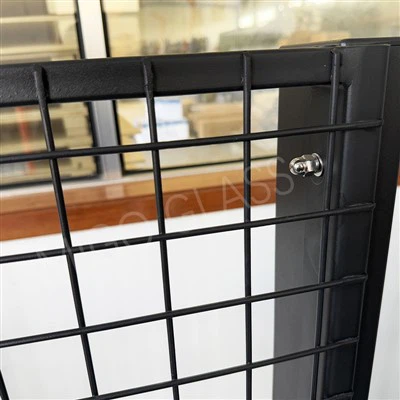
A padel court has its own integrated enclosure consisting of:
Glass panels + steel structure + mesh fencing
Therefore, the existing tennis fence may not be suitable for the new court.
However, some existing fencing may potentially be reused elsewhere on the site, depending on its condition and design.
Before demolition, check whether any existing:
Fence posts
Gates
Lighting
Electrical systems
Drainage components
can be reused.
This may help reduce the overall conversion cost.
7. Can Existing Tennis Court Lights Be Reused?
Possibly-but this requires an engineering and lighting assessment.
Existing tennis court lighting may have:
Different pole positions
Different mounting heights
Different light distribution
Different illumination requirements
Different glare characteristics
Simply keeping the existing lights does not guarantee suitable illumination for padel.
The new court layout should be evaluated together with the lighting system.
If the existing poles are in suitable locations and structurally adequate, some components may potentially be reused.
Otherwise, new lighting may be required.
8. Check the Court Orientation
If you are converting an existing tennis court, the court orientation has already been determined.
That means you should evaluate whether the existing orientation is suitable for the new padel court.
Consider:
Sun position
Player visibility
Operating hours
Surrounding buildings
Trees
Shadows
Wind exposure
If the orientation is not ideal, you need to decide whether the advantages of using the existing site still outweigh the limitations.
9. What About the Existing Tennis Court Surface?
You generally have several possible approaches.
Option 1: Keep the Existing Surface
If the existing surface is stable, level and suitable, it may be possible to install the padel court on top of or within the existing surface using an appropriate engineered anchoring system.
Option 2: Repair the Existing Surface
If there are localized defects, the surface may be repaired before installation.
Option 3: Upgrade the Base
If the existing surface has significant problems, additional preparation may be required.
Option 4: Rebuild the Base
For severely damaged or unsuitable tennis courts, rebuilding the foundation or playing surface may be more economical in the long term.
The right choice depends on the actual condition of the existing court.
10. Can One Tennis Court Become One Padel Court?
Usually, an existing tennis court provides more area than one padel court requires.
This means that converting one tennis court into one padel court may leave unused space.
From a commercial perspective, this raises an interesting question:
Can the existing tennis court area accommodate more than one padel court?
In some locations, the available site may potentially be reorganized to accommodate multiple padel courts.
However, this depends on:
Exact site dimensions
Building setbacks
Court spacing
Access
Safety requirements
Local regulations
Drainage
Lighting
Existing infrastructure
Do not assume that a tennis court can automatically be converted into two or more padel courts without checking the complete site layout.
11. Why Are Tennis Clubs Converting to Padel?
For existing tennis facilities, padel conversion can offer several advantages.
Existing Land
The club already owns or leases a developed sports site.
Existing Infrastructure
Some infrastructure may potentially be reused, such as:
Parking
Reception
Changing rooms
Toilets
Electrical supply
Drainage
Clubhouse
Landscaping
Faster Development
Compared with developing a completely new sports facility, using an existing site may reduce some preparation work.
New Revenue Opportunities
Existing tennis clubs can introduce padel without necessarily abandoning tennis.
A mixed facility can offer:
Tennis + Padel + Coaching + Social Events + Tournaments
This can create a broader customer offering.
12. What Should You Inspect Before Converting a Tennis Court?
Before ordering the padel court, inspect the existing site.
Site Checklist
1. Dimensions
Measure the actual usable area.
2. Surface
Check cracks, settlement and unevenness.
3. Foundation
Determine the existing slab or pavement construction.
4. Drainage
Check slopes, drains and water accumulation.
5. Fencing
Determine what can be removed or reused.
6. Lighting
Check pole positions, structural condition and electrical supply.
7. Access
Confirm that glass and steel components can reach the site.
8. Utilities
Check electricity and drainage connections.
9. Local regulations
Confirm whether the conversion requires permits or approvals.
10. Wind conditions
For outdoor courts, confirm the applicable local wind requirements.
13. Existing Tennis Court vs. New Padel Court Site
| Factor | Existing Tennis Court | New Site |
|---|---|---|
| Land preparation | Potentially lower | Usually required |
| Existing surface | May be reusable | Must be constructed |
| Drainage | May already exist | Needs new design |
| Lighting | Potentially reusable | New system required |
| Fencing | May require removal | New installation |
| Foundation | Depends on existing structure | Designed specifically for padel |
| Parking | Often already available | Must be planned |
| Clubhouse | Potentially reusable | May need construction |
| Conversion complexity | Site-dependent | More predictable |
The biggest advantage of an existing tennis court is not necessarily the playing surface.
It is the possibility of reusing an entire existing sports facility.
14. How Much Can You Save by Using an Existing Tennis Court?
There is no universal percentage because the savings depend heavily on the condition of the existing facility.
Potential savings may come from:
Existing land preparation
Existing drainage
Existing electrical infrastructure
Existing parking
Existing clubhouse
Existing access roads
Existing landscaping
However, you may also encounter unexpected costs, such as:
Concrete repairs
Drainage modifications
Surface removal
New foundations
Fence demolition
Electrical upgrades
Site leveling
Therefore, the best way to estimate the project cost is to conduct a site inspection before preparing the final quotation.
15. The Most Important Question: Is the Existing Court Structurally Suitable?
A tennis court can look perfectly fine but still be unsuitable for a padel court installation.
Before proceeding, ask your padel court supplier or engineer to evaluate:
Existing surface + foundation + drainage + anchoring + wind load + court layout
as one complete system.
This is much safer than simply asking:
"Can we put a padel court on this tennis court?"
The better question is:
"Can this existing tennis court support the proposed padel court system safely and reliably?"
Final Thoughts
Yes, an existing tennis court can often be converted into a padel court-but the existing court should be evaluated before construction.
The condition of the surface, foundation, drainage, lighting, access and surrounding space will determine how straightforward the conversion will be.
For tennis clubs, hotels and sports facilities, this can be an attractive way to introduce padel while making use of existing infrastructure.
But remember:
Don't assume an existing tennis court is ready for a padel court simply because it looks level and well maintained.
A proper site assessment before ordering can help identify foundation, drainage, structural and access issues early-when they are still relatively easy to solve.
Have an existing tennis court that you want to convert to padel?
Prepare the site dimensions, photos, existing surface information and location. A professional padel court manufacturer can use these details to make a preliminary assessment and recommend the appropriate foundation and installation solution.