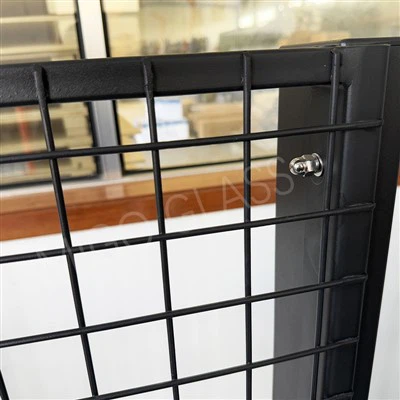
Building a padel court is more than choosing a court supplier and preparing a 10 × 20 m space.
Before construction starts, you need to check the site, ground conditions, local regulations, weather, drainage, access, utilities and court specifications.
A mistake made during the planning stage can become expensive to correct after the court has been manufactured or installed.
So, what should you check before building a padel court?
Here is a practical pre-construction checklist for investors, club owners, developers and contractors.
1. Check the Available Space
The first question is simple:
Is your site large enough?
A standard padel court has a playing area of approximately:
10 m × 20 m = 200 m²
But you should not plan the project using only the 200 m² court footprint.
Additional space may be required for:
Player circulation
Entrance and exits
Maintenance
Safety clearance
Lighting
Drainage
Equipment
Walkways
Spectator areas
If you are building several courts, check the complete site layout before deciding where individual courts will be positioned.
Tip
Measure the actual usable area of the site-not just the total property area.
Columns, walls, slopes, existing buildings, trees, utility equipment and access roads can all reduce the usable space.
2. Check Local Planning and Building Regulations
Before purchasing equipment or starting construction, check the regulations applicable to your location.
Depending on the country and project, you may need approval related to:
Planning permission
Building permits
Zoning
Fire safety
Accessibility
Noise
Lighting
Parking
Environmental requirements
Requirements can vary significantly between cities and countries.
Do not assume that a padel court is automatically permitted simply because the land is already used for sports or recreation.
For commercial projects, it is particularly important to confirm the permitted use of the property before signing a long-term lease or purchasing land.
3. Check the Ground Conditions
The court structure needs a stable and properly prepared base.
Before construction, investigate:
Soil bearing capacity
Existing concrete slab
Ground settlement
Site slope
Underground services
Water table
Existing foundations
Drainage conditions
If the ground is unstable or poorly prepared, even a high-quality padel court can experience problems.
Potential consequences include:
Uneven playing surface
Structural movement
Door misalignment
Glass stress
Water accumulation
Damage to artificial turf
For this reason, foundation design should be based on the actual site conditions rather than a generic assumption.
4. Check the Foundation Requirements
Different padel court designs may use different foundation solutions.
Depending on the project, you may need:
Reinforced concrete foundations
Concrete slabs
Anchored steel structures
Adjustable base systems
Other engineered foundation solutions
The important point is:
A "foundation-free" installation does not mean that structural stability can be ignored.
The court must still be securely anchored and designed for the loads applicable to the site.
Before construction, clarify with the supplier:
Foundation dimensions
Anchor positions
Anchor bolt specifications
Concrete requirements
Level tolerances
Required curing time
Installation sequence
5. Check Wind Conditions
Wind load is one of the most important considerations for an outdoor padel court.
A padel court contains large exposed surfaces, including:
Glass panels
Steel posts
Mesh fencing
Roof structures, if applicable
Before selecting a court structure, determine the local design wind conditions.
This is especially important for:
Coastal locations
Open fields
High-rise areas
Hurricane regions
Typhoon regions
Areas with strong seasonal winds
Ask your supplier:
What wind load has the court structure been designed for?
A professional supplier should be able to provide appropriate structural information or calculations for the project.
6. Check Drainage
Water is one of the most overlooked issues during padel court construction.
Poor drainage can result in:
Standing water
Turf damage
Algae or moss growth
Surface deterioration
Corrosion
Reduced playing quality
Before installing the court, determine:
Where will rainwater go?
The site should have an appropriate drainage strategy, including suitable slopes, drainage channels and connection to the site's existing drainage system where required.
For outdoor courts, drainage should be considered before the foundation is constructed, not after the court has been installed.
7. Check the Court Orientation
For outdoor padel courts, orientation can affect player comfort.
The position of the sun should be considered when determining the court's direction.
Direct sunlight can affect:
Visibility
Ball tracking
Player comfort
Photography and video
Spectator experience
The ideal orientation depends on the project's geographic location, operating hours and surrounding buildings.
For commercial facilities, it is worth evaluating the sun path before finalizing the layout.
8. Check the Steel Structure
Not all padel court steel structures are manufactured to the same standard.
Before ordering, ask about:
Steel Grade
Confirm the steel specification used for:
Posts
Beams
Frames
Mesh supports
Base plates
Steel Thickness
Do not compare suppliers based only on the external dimensions of the tube.
For example:
100 × 100 mm does not tell you whether the wall thickness is 2 mm, 3 mm or another value.
The steel thickness can significantly affect:
Structural performance
Weight
Durability
Cost
Surface Treatment
Ask how the steel is protected against corrosion.
Common systems include:
Hot-dip galvanizing
Pre-galvanized steel
Zinc-rich primer
Powder coating
Combined galvanizing + powder coating systems
The appropriate treatment depends on the environment.
A coastal project should not necessarily use the same corrosion protection system as a dry indoor installation.
9. Check the Glass Specifications
Glass is one of the most important components of a padel court.
Before ordering, confirm:
Glass thickness
Tempered or laminated construction
Glass dimensions
Hole diameter
Hole position
Countersunk hole requirements
Edge finishing
Flatness
Transparency
Safety standards
Packaging
Transportation method
Common padel court glass configurations include 10 mm and 12 mm tempered glass, depending on the court design and project requirements.
For premium or specialized projects, laminated glass may also be considered.
Don't Compare Glass Only by Thickness
Two suppliers may both offer "12 mm tempered glass," but the products can still differ in:
Raw glass quality
Tempering process
Edge quality
Hole processing
Optical quality
Flatness
Quality control
Certification
For a glass-heavy structure such as a panoramic padel court, these details matter.
10. Check the Glass Certification
If the project requires specific standards or certifications, confirm them before production.
Depending on the market, relevant standards may include:
EN standards
CE requirements
ANSI standards
Australian/New Zealand standards
Local building regulations
Ask the supplier to provide the applicable test reports or certificates.
Do not wait until the court has arrived on site to discover that the glass documentation does not meet the project requirements.
11. Check the Artificial Turf
The playing surface is another important component.
When comparing turf suppliers, check:
Pile height
Fiber type
Dtex
Fiber thickness
Total weight
Backing
UV resistance
Drainage
Wear resistance
Warranty
A low-cost turf may look similar when new but perform very differently after several years of intensive use.
For a commercial club, the playing surface should be selected according to:
Playing performance + durability + maintenance requirements + climate.
12. Check the Lighting System
Lighting should be considered during the design stage.
Check:
Lighting position
Number of fixtures
Illumination level
Uniformity
Glare control
Color temperature
Energy consumption
Control system
Electrical requirements
The lighting design should provide sufficient visibility without creating excessive glare for players.
If the courts will be used for tournaments or professional events, confirm the lighting requirements applicable to the intended level of competition.
13. Check Electrical and Utility Requirements
Before construction, confirm where the court's electrical supply will come from.
Consider:
Power capacity
Cable routes
Distribution boards
Lighting circuits
Grounding
Control systems
Emergency systems
Internet/network requirements
For multi-court clubs, calculate the electrical demand for the entire facility rather than treating each court as an independent installation.
14. Check Access for Delivery and Installation
This is often forgotten until the trucks arrive.
Ask:
Can the court materials physically reach the installation site?
Check:
Road width
Gate width
Turning radius
Truck access
Loading/unloading area
Crane or forklift requirements
Storage space
Installation access
Glass panels are particularly important because they are large, heavy and fragile.
A site may have enough space for the court but still be difficult to access during installation.
15. Check the Installation Sequence
Before construction begins, establish who is responsible for each stage.
A typical project may involve:
Site preparation → Foundation → Drainage → Court structure → Glass → Mesh → Lighting → Turf → Final inspection
Clarify responsibilities between:
Landowner
General contractor
Foundation contractor
Electrical contractor
Padel court supplier
Installation team
Clear responsibilities can prevent delays and disputes.
16. Check the Supplier's Technical Capability
Price should not be the only factor when selecting a padel court manufacturer.
Ask potential suppliers:
How long have you manufactured padel courts?
What markets do you supply?
Can you provide structural drawings?
Can you provide wind-load information?
What steel specification do you use?
What glass standards do you meet?
What surface treatments are available?
What warranty is provided?
Do you provide installation support?
Can you supply spare parts?
A supplier that provides a lower quotation may not necessarily provide the same level of structural design, materials or quality control.
The real comparison should be:
Price + specification + durability + technical support + warranty
rather than price alone.
17. Check the Total Project Cost-Not Just the Court Price
A quotation for a padel court may not include every cost associated with the project.
Your budget may also need to cover:
Land preparation
Foundation
Drainage
Electrical work
Lighting
Turf
Transportation
Customs duties
Installation
Crane/forklift
Building permits
Landscaping
Parking
Clubhouse facilities
Therefore, always ask:
"What is included in the quotation?"
and:
"What costs are excluded?"
This will give you a much more accurate picture of the total investment.
18. Pre-Construction Padel Court Checklist
Before placing an order, use this simple checklist:
| Item | Check Before Construction |
|---|---|
| Site size | ✓ |
| Court layout | ✓ |
| Local permits | ✓ |
| Zoning | ✓ |
| Ground conditions | ✓ |
| Foundation design | ✓ |
| Drainage | ✓ |
| Wind load | ✓ |
| Court orientation | ✓ |
| Steel specification | ✓ |
| Steel corrosion protection | ✓ |
| Glass specification | ✓ |
| Glass certification | ✓ |
| Artificial turf | ✓ |
| Lighting | ✓ |
| Electrical supply | ✓ |
| Delivery access | ✓ |
| Installation plan | ✓ |
| Warranty | ✓ |
| Total project budget | ✓ |
Final Thoughts
A successful padel court project starts before the first steel post is installed.
The most expensive mistakes are often made during planning-not construction.
Before you place your order, make sure you understand:
Where the court will be built, what the ground requires, how much wind it needs to resist, how water will drain, what materials are being supplied, and who is responsible for installation.
And remember:
Don't just ask, "How much does the padel court cost?"
Ask:
"What am I getting for that price, and how long is it designed to perform?"
A professional padel court manufacturer should be able to help you evaluate the technical requirements before production begins.
Planning a new padel court project?
Prepare your site dimensions, location, number of courts and indoor/outdoor requirements. These details can help your supplier recommend the right court structure, foundation and configuration for your project.