Your Professional Metal Frame Supplier
Our goal is to become your true partner in the field of metal frame in China. MIGO GLASS is a leading Chinese manufacturer and exporter of high-performance sports glass. We specialize in CE and SGCC-certified tempered glass solutions for padel courts, squash courts, hockey rinks, and multi-sport enclosures. We have a skilled engineering team dedicated to refining every stage, from product development and process improvement to production oversight, ensuring every product delivered meets rigorous quality and performance standards. The price is competitive and the product is quality-assured, which is a good choice for your long-term cooperation.
-
![Padel Court Steel Structure & Metal Frame]() Padel Court Steel Structure & Metal FrameDurable padel court steel structures and metal frames for indoor and outdoor courts. Corrosion-resistant finishes, customizable designs and complete court solutions from MIGO.read more
Padel Court Steel Structure & Metal FrameDurable padel court steel structures and metal frames for indoor and outdoor courts. Corrosion-resistant finishes, customizable designs and complete court solutions from MIGO.read more -
![Anti-Corrosion Steel Structure]() Anti-Corrosion Steel StructureOur heavy-duty modular steel structure is specially designed for padel court enclosure systems. It provides the main structural support for tempered glass, welded wire mesh, court doors, lighting posts, and related installation accessories.read more
Anti-Corrosion Steel StructureOur heavy-duty modular steel structure is specially designed for padel court enclosure systems. It provides the main structural support for tempered glass, welded wire mesh, court doors, lighting posts, and related installation accessories.read more -
![Padel Straight Post]() Padel Straight PostMaterial: Q235B Galvanized Structural Steel. Post Section: 50×100 mm. Thickness: 3.0 mm. OEM & ODM: Supported. MOQ: 2 sets. Lead Time: 30 daysread more
Padel Straight PostMaterial: Q235B Galvanized Structural Steel. Post Section: 50×100 mm. Thickness: 3.0 mm. OEM & ODM: Supported. MOQ: 2 sets. Lead Time: 30 daysread more -
![Padel Corner Post]() Padel Corner PostProduct Name: Padel Corner Post. Material: Galvanized Structural Steel. Post Section: 100×100 mm. Thickness: 3.0 mm. Product Name: Padel Corner Post. Material: Galvanized Structural Steel. Post Section: 100×100 mm. Thickness: 3.0 mmread more
Padel Corner PostProduct Name: Padel Corner Post. Material: Galvanized Structural Steel. Post Section: 100×100 mm. Thickness: 3.0 mm. Product Name: Padel Corner Post. Material: Galvanized Structural Steel. Post Section: 100×100 mm. Thickness: 3.0 mmread more -
![Padel Court Support Post]() Padel Court Support PostSize: Two options 60×80mm & 50×100mm, wall thickness 3mm, 4 posts per set. Finish: Hot-dip galvanized plus powder coated double corrosion protection. Custom: Size, color and OEM logo customization available. Supply: Strict batchread more
Padel Court Support PostSize: Two options 60×80mm & 50×100mm, wall thickness 3mm, 4 posts per set. Finish: Hot-dip galvanized plus powder coated double corrosion protection. Custom: Size, color and OEM logo customization available. Supply: Strict batchread more -
![Padel Court Steel Post]() Padel Court Steel PostSize: Two options 60×80mm & 50×100mm, wall thickness 3mm, 4 posts per set. Finish: Hot-dip galvanized plus powder coated double corrosion protection. Custom: Size, color and OEM logo customization available. Supply: Strict batchread more
Padel Court Steel PostSize: Two options 60×80mm & 50×100mm, wall thickness 3mm, 4 posts per set. Finish: Hot-dip galvanized plus powder coated double corrosion protection. Custom: Size, color and OEM logo customization available. Supply: Strict batchread more -
![Padel Court Metal Posts]() Padel Court Metal PostsGalvanized steel tubes. thickness: 3mm. Tube shapes:square, rectangle, fan-shaped, irregular shape.read more
Padel Court Metal PostsGalvanized steel tubes. thickness: 3mm. Tube shapes:square, rectangle, fan-shaped, irregular shape.read more -
![Padel Court Metal Structures]() Padel Court Metal StructuresPadel court metal structures typically use galvanized steel profiles. . Galvanized steel is a type of steel that has been coated with a layer of zinc to protect it from corrosion and rust.The zinc coating acts as a barrier against moistureread more
Padel Court Metal StructuresPadel court metal structures typically use galvanized steel profiles. . Galvanized steel is a type of steel that has been coated with a layer of zinc to protect it from corrosion and rust.The zinc coating acts as a barrier against moistureread more


Our services:
In the pre-sales stage, our team of experts will recommend the most suitable products according to the needs of customers and provide detailed technical consultation. During the sales period, we ensure timely delivery and provide installation guidance. For after-sales, we provide long-term technical support, warranty services and spare parts to help customers maximize the use of products and get reliable maintenance during use.
Product market:
Our products are popular and trusted by customers in Spain, France, Germany, the United States, Australia and other regions.
Our certificates:
We have CE, SGCC and ISO certifications, guaranteeing that all our glass products meet international standards of quality and safety.
OEM/ODM solutions:
We specialize in customized solutions, designing glass products according to your specific specifications, surface treatments and performance requirements.
Consistent quality: Metal frame components are factory-controlled for reliable precision and performance. Because it’s a natural material, wood can have flaws or imperfections because the quality of each tree May vary.
Design flexibility: Steel frames can handle special structural designs, including long spans, open floor plans, and unique architectures. Curves, angles, and irregular shapes are easier to achieve.
Faster construction: Choosing a prefabricated steel framework can significantly reduce project completion times.
Noncombustibility:
Steel frames offer superior fire resistance to wood framing. This makes steel a safer choice and can reduce insurance costs.
Strength:
Pound for pound, steel is stronger than wood or concrete. It has high load capacity and shock/impact resistance.
Sustainable:
Steel is 100% recyclable. This makes steel framing a great choice for sustainable projects, as recycled-content steel conserves natural resources and landfill space.
Termite/pest resistance:
Steel framing eliminates concerns over termite damage or rot and decay from moisture. This improves the building’s life span and reduces maintenance.

Steel frame of industrial buildings: Metal frames are widely used in industrial buildings due to their special features, including speed of construction and lower costs. These types of frames are usually made of large metal profiles that can withstand heavy loads and complex forces.
Metal frame of residential buildings: In residential buildings, metal frames are also widely used due to their characteristics such as strength and flexibility in design. The metal frame in this type of building usually consists of steel columns and metal beams that are connected to each other using bolted or welded connections.
Truss steel frame: Truss steel frame is one of the most widely used types of steel frame, consisting of triangular-shaped parts and usually used to cover large openings and large spaces. This type of frame is widely used in large buildings and towers, especially in areas with high snow loads.
Lsf (light steel frame) steel frame: Lsf (light steel frame) is one of the new technologies in building construction that has become a popular option in construction projects in recent years due to its light weight and high flexibility.
Specification of Metal Frame
|
Tube Framed |
Cold Formed |
Red Iron (Rigid Frame) |
|
|
Frame Material |
Square or rectangular hollow steel tubing |
Roll-formed light gauge steel |
I-beams or built up frames |
|
Rigidity |
Moderate |
Moderate to High (with proper design) |
Very High |
|
Span Capability |
Up to ~40 ft |
Up to ~60 ft |
100+ ft spans possible |
|
Long-term Durability |
Good |
Good |
Excellent |
|
Foundation Requirements |
Can mount over dirt/gravel |
Requires full slab or footings |
Requires engineered foundation |
|
Ease of Assembly |
Very easy (screw together) |
Easy to moderate |
Moderate to difficult (requires lift equipment) |
|
Customization |
Low |
Moderate |
Very High (engineered per project) |
|
Cost |
Low |
Low to Moderate |
Higher upfront, better long-term ROI |
|
Building Code Compliance |
May require additional engineering for permitting |
Easy to permit as entire structure is engineered |
Fully engineered, typically meets all code standards |
|
Common Uses |
Carports, RV covers, hobby shops |
Agricultural barns, small warehouses, storage units |
Factories, aircraft hangars, large warehouses |
Features of Metal Frame
Padel court metal structures typically use galvanized steel profiles. Galvanized steel is a type of steel that has been coated with a layer of zinc to protect it from corrosion and rust.The zinc coating acts as a barrier against moisture and oxygen, preventing rust formation. The protective zinc layer extends the lifespan of the steel, often lasting for decades with minimal maintenance. While the initial cost may be higher than untreated steel, its longevity and low maintenance needs make it a cost-effective choice over time.
These structures are designed to be durable and resistant to corrosion, suitable for both indoor and outdoor use. The frame is anchored to the ground using secure methods, often with anchor plates.
Key Components of Metal Frame
Frame:
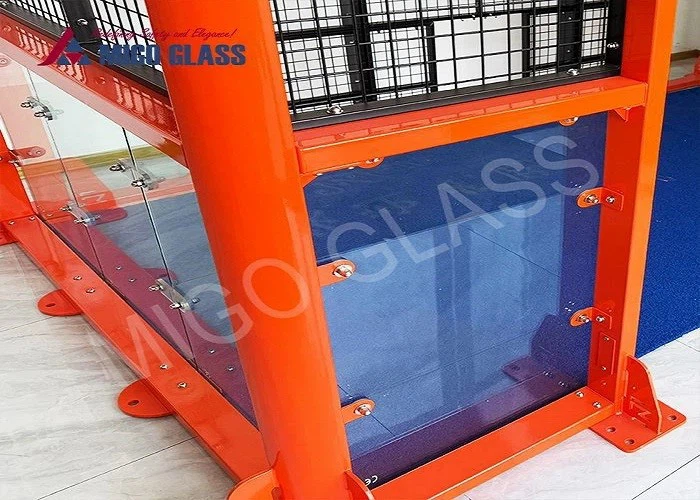
The steel used is often galvanized, which provides a protective coating against corrosion. Metal structures can be customized with different colors and finishes. The thickness of the steel is usually 3mm, the tubes can be rectangular, round, square, fan-shaped, etc.
Electro-welded mesh:
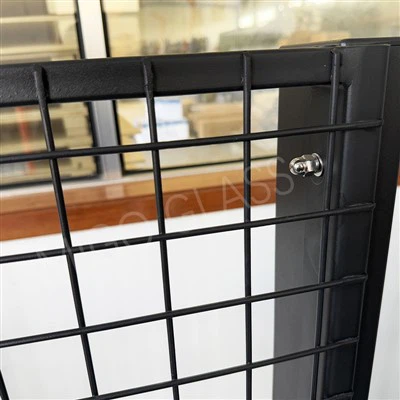
The side and top frames are often complemented by electro-welded mesh panels, which help to contain the ball and provide a barrier. Electro-welded mesh panels often have standard dimensions and mesh sizes, like 50 x 50 mm.
Anchor plates:
The steel frames are securely anchored to the ground using anchor plates, ensuring stability.

Production Process of Metal Frame
Design and planning: The process begins with a comprehensive design and planning phase. Skilled engineers and designers collaborate to create detailed blueprints that specify the frame's dimensions, structural requirements, and any customization needed.
Material selection: Choosing the right material is paramount. The type of metal selected is based on the project's needs, considering factors such as load-bearing capacity, environmental conditions, and aesthetic preferences.
Cutting: Precision cutting is a fundamental step. State-of-the-art laser or plasma cutting machines are used to precisely shape the metal according to the design specifications. This step requires meticulous attention to detail to achieve exact measurements and clean edges.
Welding: Welding is the process of joining metal pieces together. Expert welders use various techniques, including mig (metal inert gas) and tig (tungsten inert gas) welding, to create strong, seamless connections. The quality of the welds is crucial for the frame's structural integrity.
Assembly: In this stage, all the individual components are assembled to create the final frame structure. This requires careful alignment and precise fitting to ensure that the frame's dimensions match the design specifications perfectly.
Finishing: The final step involves finishing the frame to meet aesthetic and functional requirements. This May include surface treatments such as painting, powder coating, or polishing. The goal is to enhance the frame's appearance and protect it from corrosion.
Shaping and forming: Once the metal is cut, it's time to shape and form it into the desired configuration. This May involve bending, rolling, or stamping the metal sheets, depending on the frame's design.
Packing and Shipping of Metal Frame
|
Packing |
Use anti-scratch film or soft pads to isolate each piece of glass, use wooden boxes |
|
Shipping |
Shipped by road, sea, rail |
FAQ
As one of the most professional metal frame manufacturers and suppliers in China, we warmly welcome you to buy bulk metal frame in stock here and get free sample from our factory. If you have any enquiry about custom service and OEM service, please feel free to email us.
false grass, colored artificial turf, 4mm fencing wire-
![Hockey Rink Glass Fence]() Hockey Rink Glass FenceProduct Name: Hockey Rink Glass Fence. Glass Type:tempered glass,Laminated Glass. Thickness:12 mm,15 mmread more
Hockey Rink Glass FenceProduct Name: Hockey Rink Glass Fence. Glass Type:tempered glass,Laminated Glass. Thickness:12 mm,15 mmread more -
![Tempered Glass for Padel Courts]() Tempered Glass for Padel CourtsGlass Type: Tempered Glass. Glass Thickness: 10mm, 12mmGlass Size: 1995*2995/1995*1995 or Customized Size. Glass Holes:read more
Tempered Glass for Padel CourtsGlass Type: Tempered Glass. Glass Thickness: 10mm, 12mmGlass Size: 1995*2995/1995*1995 or Customized Size. Glass Holes:read more -
![Squash Court Glass Walls]() Squash Court Glass WallsProduct Name: Glass enclosure for squash courts. Glass Type: Tempered Glass, Laminated Glass. Glass Size: Customizedread more
Squash Court Glass WallsProduct Name: Glass enclosure for squash courts. Glass Type: Tempered Glass, Laminated Glass. Glass Size: Customizedread more -
![Hockey Rink Tempered Glass]() Hockey Rink Tempered GlassProduct Name: Hockey Rink Tempered Glass. Glass Type:Tempered glass. Thickness:12 mm,15 mm . Regular size: Height:read more
Hockey Rink Tempered GlassProduct Name: Hockey Rink Tempered Glass. Glass Type:Tempered glass. Thickness:12 mm,15 mm . Regular size: Height:read more -
![Padel Court Mesh Fencing]() Padel Court Mesh FencingPadel court mesh fencing is a galvanized steel wire mesh used in the upper sections of padel courts (above the glassread more
Padel Court Mesh FencingPadel court mesh fencing is a galvanized steel wire mesh used in the upper sections of padel courts (above the glassread more -
![Padel Court Durable Fence]() Padel Court Durable FenceGlass Type: Tempered Glass. Glass Thickness: 10mm, 12mm. Glass size: 1995*2995 and 1995*1995. Glass Holes: Countersunkread more
Padel Court Durable FenceGlass Type: Tempered Glass. Glass Thickness: 10mm, 12mm. Glass size: 1995*2995 and 1995*1995. Glass Holes: Countersunkread more