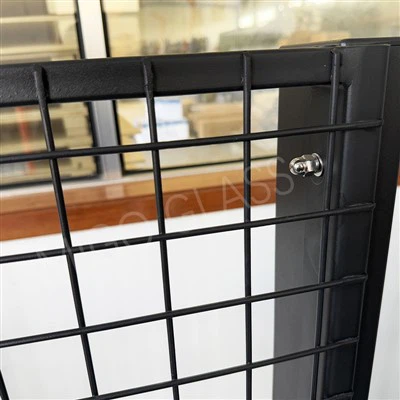
Yes, you can build a padel court on an asphalt surface-but not every asphalt surface is suitable.
Existing asphalt can sometimes provide a practical base for a padel court, especially when converting an existing tennis court, sports court or other paved area.
However, the key question is not simply:
"Is it asphalt?"
The more important question is:
"Is the existing asphalt base stable, level, well-drained and strong enough for the proposed padel court anchoring system?"
Before installation, the existing surface and underlying ground conditions should be carefully inspected.
1. Can a Padel Court Be Installed Directly on Asphalt?
In some projects, yes.
If the existing asphalt surface is:
Stable
Relatively level
Free from significant settlement
Properly compacted
Well drained
Structurally suitable for the anchoring system
it may be possible to install a padel court using an appropriate engineered fixing solution.
However, this should be determined on a project-by-project basis.
A padel court is not simply placed on the asphalt. The steel structure must be securely anchored, and the anchoring method must be appropriate for the actual construction underneath the asphalt.
2. Why Does Asphalt Condition Matter?
Asphalt can deteriorate over time.
Common problems include:
Cracking
Cracks may indicate aging, thermal movement, water infiltration or problems underneath the pavement.
Settlement
If parts of the asphalt have sunk, the court structure may not sit correctly.
Soft Areas
Poorly compacted or water-damaged areas may have insufficient bearing capacity.
Uneven Surface
A padel court requires accurate installation and leveling.
Water Accumulation
Poor drainage can accelerate asphalt deterioration and create problems for the finished court.
Therefore, an asphalt surface that looks acceptable from a distance may require further investigation before installation.
3. What Is Under the Asphalt?
This is one of the most important questions.
The asphalt itself is only one part of the pavement system.
A typical paved sports surface may include:
Asphalt → Aggregate/Base Course → Compacted Subgrade → Soil
The performance of the entire system depends on what is underneath.
For example, if the asphalt is installed over a well-compacted and stable base, it may perform very differently from thin asphalt installed over weak or poorly compacted soil.
This is why simply measuring the asphalt thickness is not always enough.
4. Can You Anchor a Padel Court Directly Into Asphalt?
This requires particular attention.
The steel structure of a padel court is subjected to loads from:
Wind
Glass panels
Mesh fencing
Players
Doors
Structural connections
For an outdoor court, wind load can be especially important.
Anchoring directly into asphalt may not provide the same structural capacity as anchoring into an appropriately designed concrete foundation.
Therefore, the supplier and/or structural engineer should determine whether:
existing asphalt + underlying base + proposed anchors
can safely support the court.
If not, additional foundation or anchoring work will be required.
5. When Is Asphalt Suitable for a Padel Court?
An existing asphalt surface may be a good candidate when the following conditions are met:
Stable Base
The pavement has no significant movement or settlement.
Good Surface Condition
There are no major cracks, potholes or damaged areas.
Adequate Levelness
The surface can accommodate accurate court installation.
Good Drainage
Rainwater can flow away from the court efficiently.
Suitable Structural Support
The existing pavement and sub-base can accommodate the proposed anchoring system.
Appropriate Wind Design
The court structure and foundation system are designed for the local wind conditions.
If these conditions are satisfied, an asphalt site may be suitable for a padel court project.
6. When Should You NOT Build Directly on Asphalt?
Direct installation may not be appropriate when the existing asphalt has:
Major cracks
Significant settlement
Large potholes
Soft spots
Poor drainage
Severe surface deformation
Unknown construction
Weak subgrade
Insufficient anchoring capacity
In these situations, simply installing the court on top of the asphalt could create problems later.
Possible consequences include:
Court movement
Door misalignment
Structural deformation
Glass stress
Water accumulation
Uneven turf
Increased maintenance costs
It is generally much cheaper to address these problems before installation than after the court is completed.
7. Do You Need a Concrete Foundation on Asphalt?
Not necessarily-but it depends on the project.
There are several possible approaches.
Option 1: Use the Existing Asphalt/Base
If the existing pavement and substructure are suitable, an engineered anchoring solution may be possible.
Option 2: Localized Concrete Foundations
Concrete foundations can be installed at critical structural points, such as the locations of major posts.
Option 3: New Concrete Slab or Foundation
If the existing asphalt is unsuitable, the site may need more extensive reconstruction.
Option 4: Remove and Rebuild
For badly deteriorated surfaces, removing the existing asphalt and constructing a new engineered base may be the most reliable long-term solution.
The appropriate method should be determined after evaluating the actual site.
8. Asphalt vs. Concrete for Padel Court Installation
Both asphalt and concrete can be found in sports facility construction, but they behave differently.
| Factor | Asphalt | Concrete |
|---|---|---|
| Initial surface | Flexible | Rigid |
| Cracking | Can develop with age and movement | Can crack if poorly designed |
| Level stability | Depends on base condition | Generally high when properly constructed |
| Anchoring | Requires careful assessment | Often easier to engineer |
| Repairs | Relatively easy for localized areas | Repairs can be more complex |
| Temperature movement | More sensitive | Lower thermal deformation |
| Existing tennis courts | Common | Common |
| Suitability for padel | Site-dependent | Site-dependent |
The important point is that neither asphalt nor concrete is automatically "better."
The quality of the base, drainage, foundation design and installation method are more important than the surface material alone.
9. Can You Build a Padel Court on an Existing Asphalt Tennis Court?
Yes, potentially.
This can be an attractive option for tennis clubs that want to convert part of their existing facilities to padel.
Before conversion, check:
Existing court dimensions
Asphalt thickness
Sub-base construction
Surface condition
Cracks
Settlement
Drainage
Existing fencing
Lighting
Underground utilities
Proposed anchor locations
If the existing tennis court is structurally sound, some of the existing infrastructure may potentially be reused.
However, an existing tennis court should never be assumed to be ready for padel simply because the surface looks good.
10. Drainage Is Critical on Asphalt
One of the biggest concerns with asphalt installations is water.
Check whether the existing surface has sufficient slope and drainage.
Look for:
Standing water after rain
Blocked drainage channels
Damaged drains
Water flowing toward the court
Cracks caused by water infiltration
Water can gradually weaken the pavement structure and accelerate deterioration.
For an outdoor padel court, drainage should therefore be evaluated as part of the foundation and site design, not treated as a separate issue.
11. What About Artificial Turf on Asphalt?
Artificial turf can be installed over an appropriate prepared base.
However, the asphalt should first be checked for:
Flatness
Cracks
Drainage
Surface stability
Cleanliness
Localized deformation
If significant defects exist, they should be repaired before the turf is installed.
Remember:
Artificial turf does not hide structural problems.
A perfectly installed turf system cannot compensate for a badly settled or unstable base underneath it.
12. What Should You Check Before Building a Padel Court on Asphalt?
Use this simple checklist:
Asphalt Surface
Is it cracked?
Is it level?
Are there soft areas?
Is there visible settlement?
Are there potholes?
Underlying Structure
What is underneath the asphalt?
How thick is the base?
Is the subgrade stable?
Is the pavement properly compacted?
Drainage
Is there sufficient slope?
Where does rainwater go?
Are existing drains functioning?
Structural Requirements
Where will the court be anchored?
Can the existing base support the anchors?
What is the local wind load?
Are additional foundations required?
Installation
Can the installation team access the site?
Can glass and steel components be delivered safely?
Is there sufficient working space?
13. Ask Your Padel Court Supplier These Questions
Before ordering, ask your supplier:
1. Can your court be installed on existing asphalt?
2. What type of foundation or anchoring system is required?
3. What information do you need about the existing pavement?
4. What wind load is the structure designed for?
5. Can you provide foundation drawings?
6. Do you require concrete foundations at the post locations?
7. What level tolerance is required?
8. What drainage conditions are required?
A professional supplier should be able to explain the installation requirements clearly before production begins.
14. Don't Choose a Foundation Solution Based Only on Price
One supplier may tell you:
"You can install directly on the asphalt."
Another may recommend:
"You need additional concrete foundations."
The difference is not necessarily that one supplier is trying to charge more.
The two suppliers may be making different assumptions about:
Soil conditions
Asphalt construction
Wind load
Anchoring
Structural design
Safety factors
This is why the foundation solution should be based on engineering requirements, not simply the lowest installation cost.
15. Final Answer: Can You Build a Padel Court on Asphalt?
Yes, you can build a padel court on asphalt in some cases.
But the asphalt must be evaluated first.
The most important factors are:
Surface condition + sub-base + drainage + levelness + anchoring + wind load
If the existing asphalt and underlying structure are suitable, it may be possible to use the existing surface and reduce site preparation work.
If the pavement is damaged, unstable or structurally unsuitable, additional foundation work-or even complete reconstruction-may be necessary.
The best approach is simple:
Inspect first. Design second. Build third.
Don't let a seemingly good asphalt surface become an expensive problem after the padel court has already been installed.
Planning to Build a Padel Court on an Existing Asphalt Surface?
Before requesting a quotation, prepare:
Site dimensions
Photos of the existing surface
Location
Number of courts
Asphalt/concrete information, if available
Drainage information
Indoor or outdoor requirements
With this information, Migo Padel can make a more accurate preliminary assessment of the required foundation and installation solution.