Ordering one padel court is relatively straightforward.
Ordering five, ten or more courts is different.
Once a project includes multiple courts, small specification differences can quickly create confusion in production, packing, unloading and installation. A buyer may intend to order "the same court" several times, while the final order actually contains different glass layouts, turf colors, connector models or steel details.
For distributors, club developers and contractors, standardization can make a multi-court order much easier to manage.
Here are six areas worth confirming before production starts.
1. Standardize the Glass Specification
Glass is one of the first items buyers usually confirm, but thickness alone is not enough.
MIGO supplies common padel court glass options including:
10mm tempered glass
12mm tempered glass
6mm + 1.52mm PVB + 6mm laminated glass
Regular clear glass
Low-iron glass
Different court designs may require different configurations, so the goal is not to force every project into one specification.
The goal is to make each specification clearly identifiable.
For a multi-court order, define:
Court A: glass type, thickness, panel size, quantity and hole drawing
Court B: glass type, thickness, panel size, quantity and hole drawing
If several courts use exactly the same glass, use the same reference number or drawing version for all of them.
This reduces the chance that similar-looking panels are mixed during installation.
2. Use One Hardware System Where Possible
A padel court contains many relatively small fixing parts.
These parts are easy to overlook because they occupy much less space than the glass or steel structure.
MIGO's hardware range includes screw fastener kits for 10mm and 12mm padel glass, with M8 or M10 configurations depending on the project specification. Kits can include SS304 bolts, cap nuts, washers, spring washers and polyamide gaskets.
When several courts are being purchased, too many hardware variations can complicate installation.
Where the court design allows it, using the same approved fastener configuration across multiple courts can make:
Packing easier
Spare-part management simpler
Installation instructions clearer
Site sorting faster
This does not mean changing the engineering design simply for convenience.
It means avoiding unnecessary variation when identical components can be used.

3. Define Acrylic Connectors by Model, Not Description
"Acrylic connector" is too broad for a multi-court order.
MIGO currently supplies several connector configurations, including:
160 × 50 × 10mm model
213 × 80 × 10mm model
140 × 140 × 10mm 90-degree connector
These models have different slot sizes and spacing requirements.
If a packing list simply says:
Acrylic connectors - 120 pcs
the installer still has an important question:
Which connector goes where?
A better method is to assign a code.
For example:
AC-01 - straight connector, small
AC-02 - straight connector, large
AC-03 - 90-degree connector
The same code can then appear on:
Drawings
Packing lists
Cartons
Installation documents
That simple system becomes more valuable as the number of courts increases.

4. Keep Steel Colors and Profiles Consistent
Steel structure is also easier to manage when the project uses a controlled set of specifications.
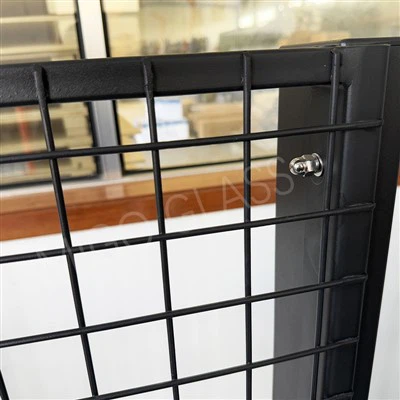
MIGO's complete court system can include hot-dip galvanized steel components with painted finishes and customized colors. The steel structure includes elements such as corner posts, intermediate posts, cross tubes and lighting posts.
For multi-court projects, confirm whether all courts will use:
The same structural model
The same RAL or agreed color
The same mesh specification
The same entrance configuration
The same lighting-post design
If one court is intended to be different, identify it clearly.
For example:
Courts 1–6: Blue panoramic
Courts 7–8: Black panoramic
This is much safer than relying on a general note such as "two colors required."

5. Standardize Turf by Specification, Not Just Color
Turf creates another common source of confusion.
A buyer may order several courts in the same color and assume the turf is therefore identical.
But turf has more specifications than color.
MIGO's current padel turf range includes textured monofilament PE options with:
12–15mm pile height
8000–10,000D Dtex
Different densities
Multiple colors
PP + Net + SBR / PU backing options
For every group of courts, record the exact turf model or specification.
Instead of:
Blue turf × 5 courts
use:
Turf Model X / Blue / 12mm / specified density × 5 courts
This is especially useful for distributors who may reorder the same court later.
A repeat order becomes much easier when the original specification can be identified immediately.
6. Create a Court-by-Court Packing Logic
Multi-court projects should not be treated as one large pile of components.
The easiest shipment to load is not always the easiest shipment to install.
Before packing, decide how the components will be identified.
One practical approach is to organize the shipment using court numbers.
Court 01
Glass crates
Steel components
Mesh
Hardware cartons
Acrylic connectors
Turf
Lighting components
Court 02
Same structure.
This does not necessarily mean every component must physically be packed separately by court.
Container loading efficiency still matters.
But cartons, crates and bundles should have enough identification that the installation team can understand what belongs together.
For glass specifically, MIGO offers protective packing including plywood crates or end-cap packaging, with separators, protective material and securing systems designed for international transport.
Clear labeling becomes even more important when one container carries components for several courts.
Why Standardization Matters
A multi-court order contains many repeated parts.
That repetition should be an advantage.
If the specifications are controlled properly, the first court can effectively become the reference for the next one.
Installers learn the component system.
Spare parts become easier to manage.
Purchasing becomes easier to repeat.
Drawings become easier to compare.
Problems become easier to trace.
The opposite is also true.
If every court contains slightly different hardware, turf, glass drilling or structural details without clear identification, the project becomes harder to manage even when every individual component is technically correct.
What Should Stay Customized?
Standardization does not mean every court must look identical.
Some differences may be intentional.
For example:
Different steel colors
Different turf colors
Different customer logos
Classic versus panoramic structures
Different glass configurations
Site-specific structural requirements
MIGO also supports customization of elements such as steel structures, glass logos, netting and other court components.
The important thing is to separate intentional customization from accidental variation.
If something is different, it should be different for a documented reason.

A Simple Rule for Multi-Court Orders
Before production begins, try to answer one question:
Can every important component be traced to a court, drawing or specification code?
If the answer is yes, the project is already easier to manage.
For buyers ordering several padel courts, good standardization is not about reducing choice.
It is about keeping the right choices consistent.
MIGO supplies tempered and laminated padel court glass together with steel structures, mesh fencing, artificial turf, lighting, screw fastener kits, acrylic connectors and other matching court components.
If you are preparing a multi-court project, you can send us the court types, quantities and drawings. We can help organize the glass and matching component specifications before production.