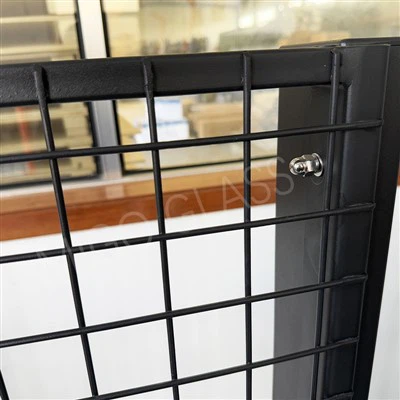
Welded mesh fencing is an essential part of many padel court structures. It helps define the playing area while working with the steel framework and glass panels to form the court enclosure.
When purchasing padel court mesh fencing, buyers often focus on wire diameter, mesh size, and surface coating. However, the quality of welded joints is another important factor that deserves attention.
For padel court manufacturers, construction contractors, and international distributors, understanding welded joint quality can help improve product evaluation and long-term maintenance planning.
1. What Are Welded Joints in Padel Court Mesh?
Welded mesh panels are commonly manufactured by joining intersecting steel wires through resistance welding or another suitable welding process.
These welded intersections help maintain the intended mesh geometry and contribute to the overall integrity of the panel.
Poorly formed joints may affect panel consistency and create potential weak points during handling, installation, or service.
2. Why Does Welding Consistency Matter?
Commercial padel courts experience regular ball impacts, vibration, and environmental exposure.
Consistent welding helps mesh panels maintain their intended construction under normal operating conditions.
Buyers should pay attention to incomplete welds, visible defects, excessive deformation, and inconsistent intersections.
Weld quality should be evaluated together with wire specifications, frame connections, and the complete fencing design.
3. How Can Welding Affect Corrosion Protection?
For outdoor padel court fencing, corrosion protection is especially important.
Welding may affect protective metallic coatings near the joint, depending on the manufacturing sequence and materials used.
If welded areas are not adequately protected, exposed steel may become more vulnerable to corrosion in humid or coastal environments.
Buyers should confirm whether the mesh is welded before galvanizing, manufactured from pre-galvanized wire, or protected using another approved coating process.
The selected manufacturing method should provide suitable corrosion protection for the intended environment.
4. Check the Surface Finish Around Welds
Welded intersections and panel edges should be inspected for coating continuity and visible defects.
Uneven coating, exposed metal, or damaged protective layers may require further evaluation.
For powder-coated fencing, surface preparation and coating application around welded areas are particularly important.
Buyers should request relevant coating specifications and inspection criteria before placing large orders.
5. What Should B2B Buyers Check Before Ordering?
When evaluating welded mesh fencing suppliers, buyers should confirm:
- Wire diameter and mesh opening dimensions
- Welding process and quality requirements
- Welded joint consistency
- Galvanizing or corrosion protection method
- Powder coating specifications
- Panel dimensions and tolerances
- Inspection and acceptance requirements
- Packaging arrangements for export
These details help buyers compare fencing products beyond basic dimensions and purchase price.
Conclusion
Welded joint quality is an important detail in padel court mesh fencing manufacturing.
Consistent welds, appropriate corrosion protection, and suitable surface finishing can contribute to reliable panel construction and reduce avoidable maintenance concerns.
For overseas B2B buyers, inspecting welded areas and confirming manufacturing specifications can help improve quality control when sourcing padel court fencing in bulk.
Explore MIGO Court Glass for welded mesh fencing solutions for commercial padel court projects.