Introduction: Rethinking the Role of Glass in Padel Courts
In modern padel court construction, glass is often misunderstood as a simple enclosure. In reality, it functions as a critical structural component that directly impacts safety, gameplay performance, and long-term durability.
For padel court builders in Spain, Italy, Sweden, and France-as well as sports infrastructure contractors and padel system brands-this distinction is essential. Treating glass as a non-structural element can lead to design flaws, installation issues, and increased lifecycle costs.
1. Glass as a Load-Bearing Element
Unlike traditional fencing, padel court glass panels absorb and distribute multiple types of loads:
Dynamic impact loads from ball rebounds
Human impact loads from player contact
Environmental loads such as wind pressure (especially in outdoor courts)
High-quality tempered padel court glass (10mm or 12mm) is engineered to handle these forces consistently. In panoramic designs, where vertical supports are reduced, the structural role of glass becomes even more significant.

2. A Core Part of the Playing Surface
Glass is not just surrounding the game-it is part of the game itself.
Ball rebound consistency depends on glass stiffness and flatness
Surface quality affects gameplay precision
Panel alignment impacts ball trajectory
For professional and commercial facilities, inconsistent glass performance can directly affect player experience and court reputation.
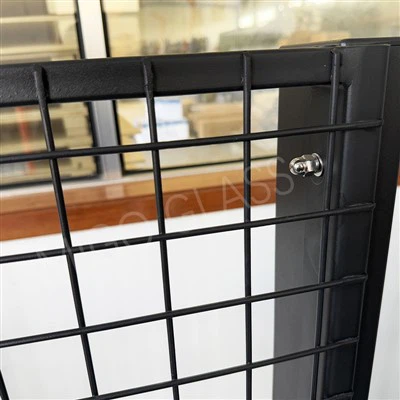
3. Structural Integration with Steel Systems
Padel court systems are engineered as integrated structures, where glass and steel work together.
Key considerations include:
Load transfer between glass panels and steel frame
Fixing methods (bolted, clamped, or framed systems)
Tolerance control to prevent stress concentration
Thermal expansion allowances
For sports infrastructure contractors, this means glass cannot be selected independently-it must match the entire court system design.
4. Safety Performance Under Failure Conditions
As a structural component, glass must not only perform under normal conditions but also behave safely under failure.
High-quality tempered safety glass for padel courts is designed to:
Break into small, blunt fragments to reduce injury risk
Maintain predictable failure behavior
Optionally use laminated structures to retain fragments
This is particularly important for public sports facilities and tournament venues, where safety standards and liability requirements are strict.
5. Precision Manufacturing = Structural Reliability
Structural performance starts at the manufacturing stage.
Critical factors include:
Uniform tempering to ensure balanced internal stress
Accurate thickness and flatness control
High-quality edge polishing to prevent crack initiation
Precision drilling for fittings
Even minor defects can compromise the structural role of the glass over time, especially under repeated stress.
6. Long-Term Durability in Outdoor Environments
Most padel courts in Europe are outdoor installations, exposing glass to:
Temperature fluctuations
UV radiation
Wind and weather conditions
As a structural component, the glass must maintain its integrity over years of use. Poor-quality materials can lead to gradual weakening, increasing the risk of failure and replacement.
7. Implications for Procurement and Project Planning
For padel court builders and system brands, recognizing glass as a structural component changes the procurement strategy:
Focus on performance specifications, not just price
Select suppliers with project experience in sports glass
Ensure batch consistency for multi-court developments
Align glass specifications with engineering and installation systems
This approach reduces project risk and improves long-term ROI.
MIGO GLASS Structural Approach to Padel Court Glass
MIGO GLASS develops engineered glass solutions for padel court systems, supporting contractors and brands with:
10mm & 12mm tempered padel court glass
Laminated safety glass (5+5mm / 6+6mm) for enhanced protection
Precision processing for structural compatibility
Consistent quality across large-scale projects
Export-grade packaging for safe delivery
Our focus is to ensure that every glass panel performs not just as a material-but as a reliable structural component within the court system.
Conclusion: The System Is Only as Strong as Its Glass
In padel court construction, glass is not a secondary element-it is a core structural and performance driver.
For builders, contractors, and padel brands across Europe, understanding this role is key to delivering safe, durable, and high-quality courts.
Choosing the right padel court glass supplier ensures not only compliance and safety-but also long-term operational success.