Specific Installation Requirements for Padel Court Glass Walls: Ensuring Safety, Durability, and Compliance
Padel court glass walls are not just structural components-their installation quality directly determines long-term safety, resistance to sports impacts, and adaptability to environmental changes. Unlike ordinary building glass, padel court glass (tempered padel court glass wall, or laminated padel court glass wall) must adhere to strict, sport-specific installation standards to withstand frequent ball impacts (up to 150 km/h), weather erosion, and mechanical stress.
Below are the core installation requirements categorized by key stages and technical details.
1. Pre-Installation Preparation: Foundation and Material Inspection
Before any glass is lifted, two critical steps lay the groundwork for successful installation: foundation verification and material pre-check. These steps eliminate hidden risks that could lead to glass cracking or displacement later.
Foundation and Frame Inspection:
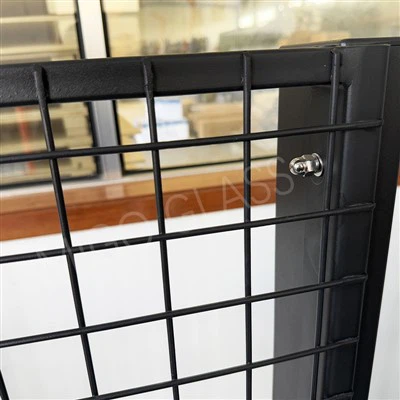
The metal frame of the padel court that supports the glass wall must be installed on a flat, load-bearing foundation. The allowable deviation for frame levelness is ≤ 2mm per meter, and verticality deviation must not exceed 3mm for the entire height (typically 3-4 meters for padel courts). If the frame is skewed, the glass will bear uneven stress, increasing the risk of breakage under ball impacts.
Additionally, the frame's connection points to the foundation must use corrosion-resistant expansion bolts (grade 304 stainless steel or higher) to prevent rust-induced loosening, especially for outdoor courts.
Glass Inspection:
All glass must be certified as tempered glass (10mm/12mm) or laminated tempered glass (6mm+1.52PVB+6mm). Inspect for:
- No visible scratches, bubbles, or edge chips (these weaken the glass's impact resistance).
- Tempering certification marks (e.g., "TEMPERED" etched on the corner) to confirm compliance with safety standards (e.g., ASTM C1048 or EN 12150).
- For laminated glass, check that the PVB interlayer is free of delamination (separation between glass layers), as this reduces its ability to hold fragments if broken.

2. Glass Fixing: Choosing the Right Hardware and Sealing
The way glass is fixed to the frame and sealed against gaps is critical to its stability and water resistance. Using metal clamps (cleats) and bolts to secure the glass to the frame, avoiding direct contact between glass and sealant (ideal for outdoor courts where temperature changes cause expansion/contraction).
Key requirements:
- Clamps must be made of anodized aluminum or 316 stainless steel (to resist corrosion from rain, sweat, or humidity).
- Bolt holes in the glass must be pre-drilled at the factory (on-site drilling is forbidden, as it can shatter tempered glass). The hole diameter must be 2-3mm larger than the bolt diameter to allow for thermal expansion (tempered glass expands ~0.01mm per °C, so gaps prevent cracking).
- A rubber gasket (EPDM or neoprene) must be placed between the clamp and glass to cushion impacts and prevent metal-to-glass friction (which can scratch and weaken the glass).


3. Post-Installation Testing: Verifying Safety and Performance
Installation is not complete until rigorous testing confirms the glass wall meets sport and safety standards. Two key tests are mandatory:
Impact Test:
Simulate real padel ball impacts using a mechanical launcher set to 120-150 km/h (the maximum speed of a competition hit). Fire 10-15 balls at the same spot on the glass (a common impact area, e.g., 1.5 meters high, center of the panel). The glass must not crack, and the frame must show no signs of deformation. For laminated glass, if broken (only under extreme force), the PVB layer must hold all fragments without splashing.
Waterproof and Wind Pressure Tests:
- For outdoor courts, conduct a water spray test (using a high-pressure hose) on the glass joints and bottom edge. No water should leak into the court or foundation after 30 minutes.
- For high-wind areas, verify the glass wall can withstand wind pressure of ≥ 1.2 kPa (equivalent to a 60 km/h wind)-this is calculated based on the court's location (e.g., coastal areas may require higher wind resistance).
4. Special Requirements for Indoor vs. Outdoor Courts
Installation must be adjusted based on the court's environment to address unique challenges:
Outdoor Courts:
- Drainage: The glass wall's base must be sloped slightly (1-2°) toward the court's drainage system to prevent rainwater from collecting behind the glass (which can rust the frame or damage the foundation).
- UV Protection: The frame and hardware must have anti-UV coatings (e.g., powder coating for aluminum frames) to prevent fading and corrosion from prolonged sunlight.
Indoor Courts:
- Humidity Control: The silicone sealant must be low-VOC (volatile organic compounds) to avoid releasing harmful fumes in enclosed spaces.
- Acoustic Insulation: For laminated glass, ensure the PVB interlayer is at least 1.52mm thick-this helps reduce noise from ball impacts (critical for indoor venues near residential areas or offices).
Conclusion
Padel court glass wall installation is a precision engineering process, not a simple construction task. Every step-from foundation alignment to post-installation testing-must comply with sport-specific standards to ensure athletes' safety, the court's durability, and long-term operational efficiency.