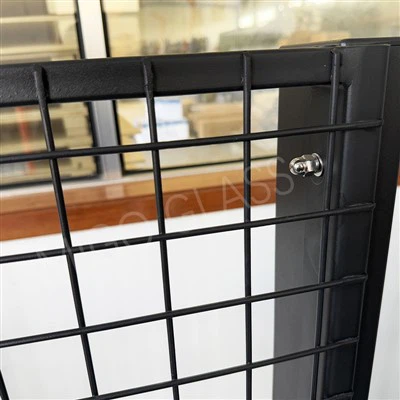
Installing padel court glass is far more than simply fixing glass panels to a steel structure. Every installation step-from foundation preparation and frame alignment to bolt tightening and final inspection-plays a critical role in the court's safety, durability, and long-term performance.
Incorrect installation can introduce hidden stresses that may lead to premature glass breakage, expensive repairs, or safety risks. Whether you are a padel court builder, distributor, contractor, or club owner, understanding the correct installation principles is essential.
Below are answers to the ten questions we receive most frequently from customers around the world.
1. What Type of Glass Is Used for Padel Courts?
Professional padel courts use fully tempered safety glass because it offers high impact resistance and excellent safety performance.
The most common specifications are:
10mm Tempered Glass
12mm Tempered Glass
Indoor clubs that require improved acoustic performance may also choose 13.52mm laminated tempered glass.
All glass should comply with internationally recognized standards such as:
CE EN12150
EN12600
SGCC ANSI Z97.1
AS/NZS 2208
2. Should I Choose 10mm or 12mm Tempered Glass?
Both are widely used, but the best choice depends on the application.
10mm Tempered Glass
Suitable for:
Residential courts
Hotels
Private clubs
Indoor recreational facilities
12mm Tempered Glass
Recommended for:
Commercial clubs
Outdoor courts
Tournament facilities
High-frequency use
The additional thickness increases stiffness and impact resistance, making 12mm glass the preferred option for premium projects.
3. How Much Gap Should Be Left Between Glass Panels?
Glass expands and contracts with temperature changes.
For this reason, a small installation clearance should always be maintained between adjacent glass panels and between the glass and the steel frame.
The exact clearance depends on the court design and hardware system specified by the manufacturer.
Never install glass panels so tightly that they touch each other or the steel structure directly.
4. Why Are Plastic Conical Washers Required?
Plastic or nylon conical washers perform several important functions:
Prevent direct metal-to-glass contact
Distribute bolt pressure evenly
Absorb small structural movements
Protect countersunk holes from damage
Installing glass without these washers greatly increases the risk of stress-related breakage.
5. How Tight Should Glass Bolts Be?
Bolts should be tightened only to the torque recommended by the court manufacturer.
Over-tightening can:
Create excessive stress around fixing holes
Damage protective washers
Increase the likelihood of spontaneous breakage
Bolts should always be tightened gradually and evenly in sequence rather than one at a time.
6. Can Tempered Glass Be Cut or Drilled After Tempering?
No.
Once tempered, the glass cannot be:
Cut
Drilled
Ground
Polished
Modified in any way
Any attempt to process tempered glass after tempering will cause it to shatter immediately.
All holes, cutouts, and edge finishing must be completed before the tempering process.
7. Can a Padel Ball Break Tempered Glass?
Under normal playing conditions, the answer is no.
Professional 10mm and 12mm tempered glass is specifically designed to withstand repeated impacts from padel balls and occasional player contact.
If glass breaks after a normal impact, the root cause is usually:
Installation stress
Edge damage
Poor frame alignment
Manufacturing defects
Nickel sulfide inclusions (rare)
8. How Should Glass Panels Be Handled During Installation?
Glass should always be lifted using professional equipment such as:
Vacuum lifters
Glass suction cups
Protective edge guards
Certified lifting frames
Never drag glass across concrete or steel surfaces, as even minor edge damage can significantly weaken the panel.
Before installation, every panel should be inspected for chips, cracks, or transportation damage.
9. What Should Be Checked Before Installing the Glass?
Before lifting the first panel, installers should verify that:
The concrete foundation meets the design dimensions.
Steel posts are vertical and securely fixed.
Beam alignment is correct.
Bolt holes match the engineering drawings.
Glass accessories are complete.
Protective washers and spacers are available.
Taking time to inspect these items can prevent costly installation problems later.
10. How Can I Extend the Service Life of Padel Court Glass?
Proper maintenance is just as important as correct installation.
We recommend:
Inspecting bolts periodically
Checking washers for wear
Cleaning glass with non-abrasive products
Monitoring steel corrosion
Inspecting glass edges after accidental impacts
Replacing damaged accessories immediately
A well-installed and properly maintained glass system can provide many years of reliable service.
Professional Installation Checklist
For the best installation results, always follow this checklist:
✔ Verify foundation dimensions.
✔ Confirm steel frame alignment.
✔ Inspect every glass panel before installation.
✔ Use plastic conical washers and rubber spacers.
✔ Maintain expansion gaps.
✔ Tighten bolts evenly to the recommended torque.
✔ Prevent direct glass-to-steel contact.
✔ Complete a final inspection after installation.
Why Choose Qingdao Migo Glass?
Qingdao Migo Glass manufactures precision-engineered glass systems specifically designed for professional padel courts.
Our products include:
10mm & 12mm Tempered Padel Court Glass
Optional Heat Soak Tested (HST) Glass
Precision CNC-drilled countersunk holes
Fully polished edges
Safety corner processing
CE, SGCC, and AS/NZS certified quality
Complete installation accessories
Technical support for global projects
With over 11 years of experience, we supply high-performance glass solutions to padel court manufacturers, distributors, contractors, and sports facility developers around the world.
📩 Contact Bella Xie for price & technical details
📧 bella@migoglass.com
📱 WhatsApp: +86 18561397391