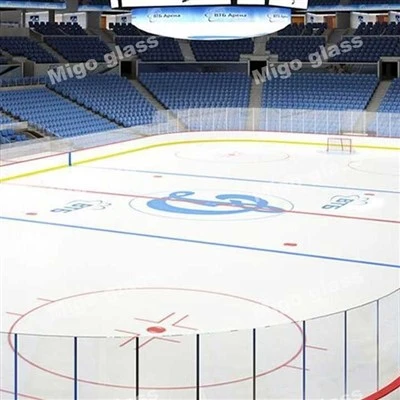
As modern sports facilities continue to improve their design and viewing experience, glass visibility is becoming an important consideration for court builders and venue developers. In facilities with extensive glass enclosures, reflections from artificial lighting and surrounding environments can sometimes affect the viewing experience of players and spectators.
This is creating greater interest in anti-reflective glass solutions, particularly for sports venues that require clear visibility, modern aesthetics, and reliable safety performance.
Clear Visibility Becomes a Design Priority
Glass is widely used in padel courts, squash courts, sports arenas, and other recreational facilities.
While transparent glass provides an open viewing experience, reflections can become noticeable under certain lighting conditions. This is especially relevant in indoor sports venues where artificial lighting operates throughout the day.
For spectators, coaches, and players, clear visibility is an important part of the overall sports environment.
As a result, sports facility designers are paying closer attention to the optical properties of glass when selecting materials for new construction and renovation projects.
Anti-Reflective Technology Improves Visual Clarity
Anti-reflective glass uses specialized optical coatings to reduce surface reflections and allow more light to pass through the glass.
Compared with conventional clear glass, a properly designed AR coating can provide:
- Reduced surface reflections
- Improved transparency
- Clearer viewing through glass panels
- Better visual presentation in illuminated environments
These characteristics make anti-reflective glass an interesting option for selected sports facilities, viewing areas, and architectural applications.
However, coating performance depends on the coating design, glass configuration, lighting conditions, and viewing angle.
Safety and Processing Remain Essential
For sports applications, optical performance must be considered alongside mechanical strength and installation requirements.
Buyers should evaluate glass thickness, tempering quality, edge finishing, dimensional accuracy, and compatibility with the supporting structure.
Coating durability is another important consideration, particularly where glass is exposed to frequent cleaning, handling, and intensive commercial use.
For this reason, professional buyers should confirm that the selected anti-reflective glass configuration is suitable for the intended application and processing requirements.
MIGO Glass Provides Customized Anti-Reflective Glass
MIGO Glass offers anti-reflective tempered safety glass for customers seeking specialized glass solutions.
Available thickness options include 10mm, 12mm, and 15mm, with customized specifications available according to project requirements.
The company also provides glass processing and export services to support international sports facility contractors, distributors, and equipment manufacturers.
For buyers developing modern sports venues, selecting suitable glass requires balancing optical performance, safety requirements, and installation compatibility.
Optical Performance Creates New Opportunities
As sports facilities become more sophisticated, glass selection is increasingly influenced by both functional and visual requirements.
Anti-reflective glass offers another option for projects where reduced reflections and improved visibility are important design considerations.
By combining customized processing with different glass thickness options, MIGO Glass continues to support international customers looking for specialized glass solutions for sports and architectural applications.