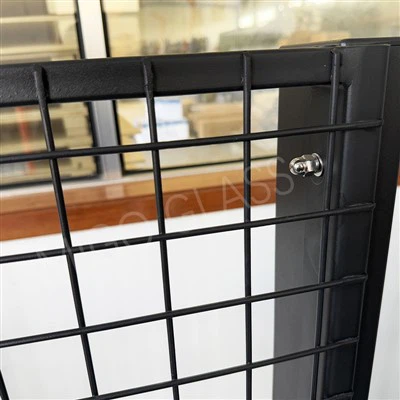
A padel glass washer may be a small component, but its design can directly affect how fixing hardware fits around a tempered glass panel. An incorrectly matched washer may result in uneven seating, installation difficulties, or unwanted localized contact around the fixing point.
For padel court contractors, distributors, and project buyers, washer selection should therefore be considered together with glass thickness, countersunk hole dimensions, bolts, gaskets, and the supporting structure. The objective is not simply to find a washer that fits the bolt, but to ensure that all components work together as a coordinated glass fixing system.
What Does a Padel Glass Washer Do?
A padel glass washer forms part of the connection between the tempered glass panel and its fixing hardware.
Depending on the fixing design, the washer helps provide an appropriate interface between the fastener and the glass assembly. It can also help distribute contact over the intended seating area rather than concentrating it at an unsuitable point.
However, the washer should not be treated as a component that can compensate for incorrect hole dimensions, poor frame alignment, or unsuitable installation methods. Its dimensions and profile must match the complete fixing design.
Why Countersunk Hole Geometry Matters
Padel court glass may use countersunk holes to accommodate specially designed fixing accessories. In this type of connection, washer geometry becomes particularly important.
Buyers should consider the through-hole diameter, countersunk diameter, countersunk profile, glass thickness, and the dimensions of the corresponding washer.
Two washers may appear similar but have different profiles, internal clearances, or overall dimensions. If the washer does not correctly match the countersunk hole, it may not seat as intended.
For this reason, buyers should evaluate the washer according to the approved glass drawing rather than selecting it only by appearance or bolt diameter.
How Washer Shape Affects Fit
The profile of a countersunk washer should correspond to the geometry of the glass fixing point.
When the shapes are compatible, the washer can sit more consistently within the designed connection. When they are not compatible, part of the component may contact the glass differently from the intended design.
This is particularly important for projects where glass and accessories are purchased from different suppliers.
Before glass production begins, the glass manufacturer, hardware supplier, and project buyer should work from compatible technical drawings. Hole dimensions should not be finalized independently from the fixing accessories.
Why Washer Material Matters
Material selection is another factor buyers should consider.
Padel glass washers may use engineering polymers such as polyamide (PA), depending on the fixing system. The material should be suitable for the intended connection and project environment.
For outdoor padel courts, buyers should not evaluate a washer only by its material name. The actual grade, dimensional requirements, intended application, temperature conditions, and environmental exposure should be considered according to the project specification.
For large commercial projects, consistent material and dimensions across production batches are also important.
Washer vs. Gasket: Why Both Need to Match
Washers and protective gaskets may appear together in a padel court glass fixing assembly, but they should not automatically be treated as interchangeable components.
A washer is generally associated with the mechanical fixing and seating of the fastener, while a gasket or protective insert can provide separation between the glass and other parts of the fixing assembly. The exact function depends on the connection design.
For countersunk glass holes, specially shaped or conical gaskets may be required to match the recessed geometry.
This means the washer, gasket, bolt, and glass hole should be selected as one fixing system rather than purchased independently based only on individual dimensions.
What Should Buyers Confirm Before Ordering?
Before purchasing padel court glass washers in bulk, buyers should first confirm the glass specification, including panel thickness and hole dimensions.
The countersunk hole drawing should clearly indicate the through-hole diameter and countersunk dimensions. These measurements can then be compared with the washer profile and internal clearance.
Bolt size should also be confirmed. Matching an M8 or M10 bolt, for example, does not automatically mean that every washer designed around that fastener size will match the glass.
If gaskets, sleeves, or other protective components are included in the fixing system, their dimensions and installation positions should also be reviewed.
For overseas projects, keeping approved drawings and component references can make future replacement orders easier and reduce the risk of receiving incompatible accessories.
Installation Quality Is Still Important
Correct washer selection does not replace proper installation.
Before fastening the glass, installers should check that the washer, gasket, bolt, and other components correspond to the approved assembly. Glass around the fixing hole should also be inspected for visible damage before installation.
If a countersunk washer does not sit correctly, installers should check the hole dimensions, accessory specification, and alignment rather than assuming that additional tightening will solve the problem.
Fastening procedures should follow the requirements of the specific padel court fixing system. Installation values or methods from unrelated architectural glass fittings should not automatically be applied to padel court glass.
Choosing the Right Washer for a Padel Glass Fixing System
For project buyers, the most useful question is not simply, "Which padel glass washer fits this bolt?" A better question is, "Which washer matches this glass hole and complete fixing assembly?"
Glass thickness, countersunk hole geometry, washer profile, gasket dimensions, bolt specifications, and supporting hardware all need to be considered together.
For distributors and padel court contractors purchasing in bulk, confirming these details before production can reduce accessory mismatches and simplify installation at the project site.
When sourcing padel court glass and fixing accessories, buyers should therefore provide the relevant glass drawings and hardware specifications to the supplier. A coordinated combination of tempered glass, washers, gaskets, bolts, and connectors provides a more reliable basis for consistent padel court installation.