In recent years, padel has rapidly risen in the global sports market, becoming one of the fastest-growing ball sports.
More and more sports clubs, sports complexes, and even high-end resorts are investing in building padel courts.
So the question is: why is this sport being introduced to sports clubs so quickly?
The answer is actually quite clear-it combines "low barriers to entry, high participation, and strong commercial returns.

I. Low Barrier to Entry, Suitable for a Wider Range of People
One of the biggest advantages of padel is its ease of learning and playing.
Compared to traditional tennis:Smaller courts;More controllable ball speed;Lower technical barrier;Even beginners can quickly get started
This makes it ideal for:Families;Beginners;Fitness enthusiasts;Teenagers and seniors
Sports clubs can therefore attract a broader membership base.
II. Significantly Increased Member Engagement
Many sports clubs have observed a clear trend: Reservations for padel are significantly higher than for traditional tennis courts.
Reasons include:The doubles format is more social;The pace of play is faster and more engaging;It's suitable for small group activities;It's easier to establish a "fixed exercise habit"
The result is:Increased court utilization;Higher member activity;Strengthened renewal rates
III. Shorter Business Return Cycle
For sports clubs, return on investment is a core issue.
Padel courts offer:Relatively controllable construction costs;High usage frequency;Flexible pricing models (by the hour/membership)
Many clubs can achieve the following in a short time:Recover investment costs;Establish stable cash flow
Therefore, it is considered a "high-value sports asset."
IV. High Space Utilization Efficiency
Padel courts are smaller than traditional tennis courts, which means:More courts can be built on the same land;They can be installed even in city centers;Indoor venue renovations are easier.
This is a crucial advantage in areas with high land costs.
V. Social Attributes Drive Continued Growth
Padel is primarily played in doubles, which fosters a strong social element:Easier to form teams;More suitable for social activities;Easier to build community culture
Sports clubs not only provide sports spaces but also create social scenarios.
VI. Global Trends Are Accelerating
Padel is currently experiencing rapid growth in several regions, including:Europe (Spain, Italy, etc.);Middle East;North American market;Emerging Asian markets.
More and more international sports brands and clubs are joining this trend.
This means it has gradually moved from a "niche sport" to a "mainstream sport."
VII. Standardization of Venues Drives Widespread Construction
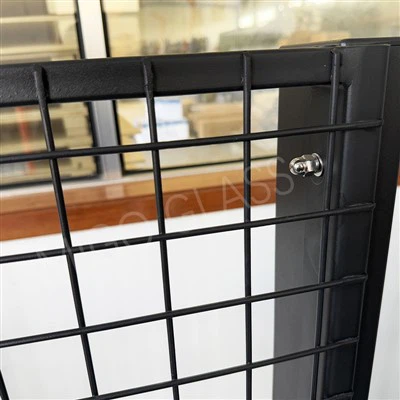
Modern padel courts have developed a relatively mature standard system, including:Tempered glass enclosure system;Standard steel structure frame;Dedicated connection and fastening system;Artificial turf system.
These standardized components enable:Faster construction;Simpler maintenance; Lower project risk


VIII. Strategic Choice for Sports Clubs
For sports clubs, building padel courts is not just adding a new project, but also:Expanding revenue streams;Enhancing brand image;Attracting younger members;Improving venue competitiveness
It is becoming a "standard upgrade option" for modern sports clubs.
Conclusion
The increasing number of sports clubs building padel courts is not accidental, but driven by the following factors:
Easy-to-learn sport attributes
High participation and social attributes
Good commercial returns
Space utilization advantages
Rapid global market growth
Padel is becoming one of the most promising growth areas in the sports industry.
If you are planning a padel project,we can provide:
Tempered glass padel court system
Complete court structure solution
Installation and accessories
Customized engineering support
Helping sports clubs quickly build high-standard padel courts and maximize commercial value