Padel is a sport that is now played by more and more people around the world. Building a venue must be safe, durable, and professional, which is no small matter. The glass wall in the venue is a very critical link. It not only determines whether the game can be seen clearly and whether the venue looks good, but more importantly, it is directly related to whether the players and spectators will get into trouble. Therefore, whether it is a developer, a glass maker, or the owner of the venue, you must understand the safety standards of the glass in the padel venue. This matter cannot be sloppy.
1. Why is the safety of the glass in the padel court so important?
Padel is a sport with high intensity. When playing, the ball always hits the wall, and the players run very fast, and their bodies hit the surrounding walls from time to time. Therefore, the glass panels used in the court must withstand repeated collisions, temperature changes, and people may hit them. If the glass is not up to standard and has problems, someone may be injured, and it will cost a lot of money to repair it, and you may even have to go to court. Therefore, according to international safety standards, there is no other choice.
2. What glass is commonly used on padel courts?
There are two main types of glass used on padel courts: tempered glass and laminated tempered glass. These two types of glass are not ordinary glass. They are specially treated, which makes them much stronger than ordinary glass and also improves safety.
Tempered glass (according to EN 12150): It is strengthened by heat treatment, which makes it easier to break into small pieces and less susceptible to punctures.
Laminated tempered glass (according to EN 14449): It consists of two or more layers of tempered glass bonded with PVB or EVA. So, even if it breaks, the glass will remain stuck together and will not come off, providing more protection.
3. International safety standards and certifications
EN 12150: Tempered Safety Glass: This European standard specifies the specifications for tempered safety glass. To meet this criterion, glass must be examined to ensure that its dimensions are unexpected. It must go through shatter (breaking into little harmless pieces), impact (resistance to higher pressures), and bending deformation (bending and deforming). Tempered glass used on tennis courts must meet or exceed EN 12150 criteria, which are typically 10 or 12 mm thick, depending on the location and design.
EN 12600: Pendulum impact test. This standard allows you to investigate how glass reacts to impacts. We propose Class 1 (B) Type 1 glass for padel courts because it strikes an appropriate balance between safety and durability.
ANSI Z97.1 and ASTM C1048 (for North America): If the court is to be built in the United States or another nation that has accepted American standards, the manufacturer must adhere to ANSI Z97.1 and ASTM C1048. These tests primarily evaluate the glass's impact resistance, clarity, and the quality of the tempering process.
4. Safety issues of installation and hardware
No matter how good the glass quality is, if it is not installed properly, it may be a safety hazard. When installing, pay attention to the following:
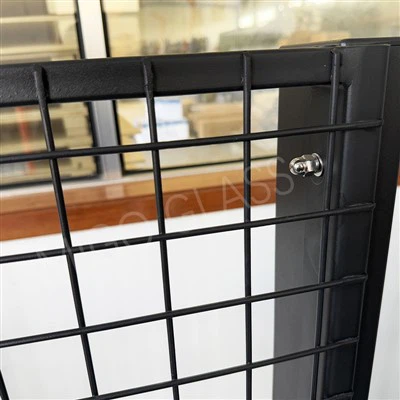
The bolts and hardware used must meet structural standards and be certified.
A shock-absorbing gasket should be placed between the glass and the frame.
Align accurately to avoid uneven force or pressure on the glass.
The installer must also follow the national building codes and the guidelines of the Tennis Federation to ensure that all aspects meet the requirements.
5. Maintenance and inspection are also necessary
Safety is not only important during installation, but also requires regular inspections. Check for tiny cracks or broken edges, loose or rusted accessories, signs of laminated glass delamination, and movement or sinking of the foundation, all of which may cause problems with the glass.
When cleaning, use non-abrasive materials, otherwise the surface of the glass will be scratched. Over time, these scratches may become weak points of the glass.
6. Follow the rules to have a competitive advantage
For manufacturers who build tennis courts and make glass, following global safety standards is not only a legal requirement, but also gives them an advantage in the market. Customers are now increasingly paying attention to certified and professionally designed courts because such courts can guarantee long-term safety and stable performance. In an increasingly competitive industry, manufacturers who can provide test reports, certification documents, and technical support are more likely to be remembered.
Conclusion
The glass of the padel court is not just a decoration, but also an important structure that directly affects the safety of players and the performance of the game. Understanding and following relevant safety standards, such as EN 12150, EN 14449, and EN 12600, will ensure that the court is not only beautiful, but also safe and reliable. Whether you are a developer, contractor, or venue owner, working with qualified manufacturers and insisting on certified glass will protect your money and reputation in the long run.