As pickleball continues to attract players across North America, Europe, the Middle East, and other emerging markets, more sports facility developers are including dedicated pickleball courts in new clubs, resorts, residential communities, and multi-sport projects.
For developers, purchasing a pickleball court is not simply about choosing equipment. A successful project requires the right balance between court design, player capacity, durability, maintenance, safety, and long-term commercial value.
Before requesting quotations, buyers should first understand how the facility will actually be used.
Start with the Project Application
A private residential court and a high-traffic commercial facility should not use exactly the same specifications.
Developers should first define:
- Expected number of players
- Daily operating hours
- Indoor or outdoor installation
- Recreational or competition-level use
- Local weather conditions
- Future expansion requirements
Commercial facilities with frequent bookings generally require stronger structural components and more durable surface systems than lightly used private courts.
Outdoor projects also require additional attention to UV exposure, corrosion protection, drainage, and wind conditions.
Choose the Right Enclosure System
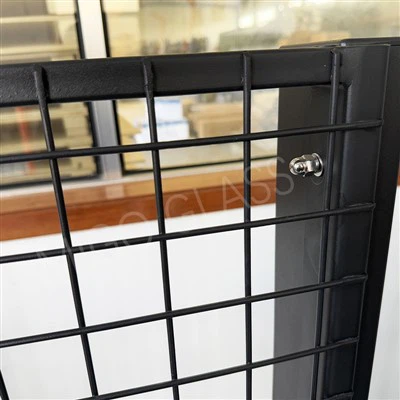
Traditional pickleball facilities often use metal mesh fencing, but premium projects are increasingly exploring combinations of steel mesh fencing and tempered glass.
Metal fencing remains practical for standard clubs because it offers durability, ventilation, and relatively simple maintenance.
Tempered glass may be considered for selected areas where developers want:
- Better spectator visibility
- A more premium appearance
- Improved photography and video views
- A modern commercial facility design
The correct solution depends on the project positioning. Developers should avoid choosing enclosure materials based only on appearance; structural safety, local wind conditions, maintenance, and replacement availability must also be considered.
Pay Attention to the Playing Surface
The surface directly influences player comfort, ball behavior, drainage, and maintenance.
Depending on the project, options may include acrylic sports surfaces or specialized synthetic systems.
Professional buyers should evaluate:
- Slip resistance
- Ball rebound consistency
- UV resistance
- Drainage performance
- Surface durability
- Maintenance requirements
In hot climates, surface temperature should also be considered. Some darker materials can become uncomfortable during peak afternoon conditions.
Lighting Should Be Designed, Not Simply Purchased
For commercial facilities operating in the evening, lighting can directly affect booking hours and revenue.
A professional LED lighting system should provide uniform illumination with controlled glare, rather than simply using high-wattage floodlights.
Developers should request information about:
- Target lux levels
- Lighting uniformity
- Beam angle
- Glare control
- IP rating
- Energy consumption
Good lighting improves ball visibility while reducing unnecessary electricity costs.
Consider Long-Term Operating Costs
Initial purchase price represents only one part of the investment.
A cheaper court may require more frequent repairs, surface maintenance, hardware replacement, or lighting service.
| Area | What Developers Should Evaluate |
|---|---|
| Structure | Corrosion protection and expected lifespan |
| Enclosure | Safety, durability, and replacement availability |
| Surface | Wear resistance and maintenance frequency |
| Lighting | Energy efficiency and fixture lifespan |
| Hardware | Corrosion resistance and spare parts |
| Installation | Local labor and equipment requirements |
A Practical Project Example
A sports facility developer planning several outdoor courts initially focused heavily on reducing construction cost. After reviewing the expected daily usage, the specification was adjusted to include stronger corrosion protection, commercial-grade LED lighting, and more durable enclosure components.
The initial investment increased slightly, but the developer expected lower maintenance requirements and fewer operational interruptions.
This is an important consideration for commercial facilities: a court that is frequently closed for repairs cannot generate booking revenue.
Final Consideration
For sports facility developers, the best pickleball court is not necessarily the most expensive or the cheapest. It is the system that matches the actual business model.
Before purchasing, developers should evaluate usage intensity, climate, structural durability, playing surface, lighting, maintenance, and future expansion as one complete project.
A well-planned court may require a higher initial investment, but better durability and lower operating costs can create significantly stronger value over the full lifecycle of the facility.