Outdoor pickleball courts are exposed to changing weather conditions throughout the year, and wind load is one of the most important factors that should be considered during the design stage. While many buyers focus on fence height, mesh quality, or surface coating, they often overlook how strong winds can affect the long-term stability of the entire fencing system.
A properly designed fence should not only keep balls within the playing area but also remain stable and safe under local wind conditions. For commercial sports facilities, choosing a fencing system that matches the project environment can help reduce maintenance costs and extend the service life of the court.
Why Wind Load Matters
Wind creates pressure on the fencing system, especially on outdoor courts located in open areas. Over time, repeated wind loads can cause posts to lean, bolts to loosen, mesh panels to deform, or welds to fatigue if the structure is not designed correctly.
In regions that frequently experience strong winds, storms, or typhoons, the impact is even greater. Designing the fence without considering local wind conditions may lead to expensive repairs or complete fence replacement.
For this reason, experienced manufacturers usually ask buyers about the project location before recommending a fencing specification.
Key Design Factors
Several components work together to improve wind resistance.
The first is the steel post. Larger post sections with thicker wall thickness provide greater structural strength and better resistance to bending.
The second is the foundation system. Even the strongest steel posts cannot perform properly if the concrete foundation is too small or the anchor bolts are incorrectly installed.
Other important factors include:
- Steel post dimensions
- Wall thickness
- Base plate size
- Anchor bolt specification
- Post spacing
- Welding quality
- Connection hardware
Each of these elements contributes to the overall stability of the fencing system.
Does Mesh Design Affect Wind Resistance?
Yes. The design of the mesh panel can influence how much wind pressure acts on the fence.
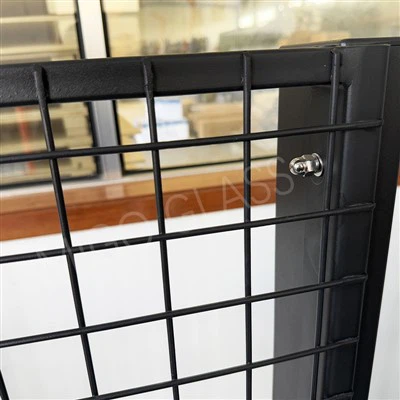
Welded mesh fencing allows air to pass through the openings, reducing wind pressure compared with solid barriers. However, the wire diameter and mesh opening should still be selected according to the project requirements.
Using excessively thin wire simply to reduce costs may increase the possibility of deformation after years of outdoor exposure.
Surface Protection Is Also Important
Wind often carries dust, sand, rain, and moisture, all of which can accelerate corrosion.
For outdoor pickleball courts, buyers should choose appropriate surface treatments such as:
Hot-dip galvanizing
Powder coating
Galvanized plus powder-coated systems
The best option depends on the local climate. Coastal projects generally require stronger corrosion protection than inland installations.
Wind-Related Design Checklist
| Design Item | Why It Matters |
|---|---|
| Steel Post Size | Improves structural strength |
| Wall Thickness | Increases bending resistance |
| Concrete Foundation | Supports the entire fence |
| Anchor Bolts | Secure the posts firmly |
| Surface Treatment | Protects against corrosion |
| Welding Quality | Ensures long-term durability |
Project Example
A sports club in Australia planned to install several outdoor pickleball courts in an open recreational area where strong seasonal winds were common.
Instead of using the standard fencing specification, the supplier recommended thicker steel posts, larger base plates, and reinforced foundations. Although the material cost increased slightly, the upgraded design improved the stability of the fencing system and reduced the likelihood of future maintenance caused by wind damage.
The project also demonstrated the importance of discussing local environmental conditions before production begins.
Final Thoughts
Wind load is an essential factor in outdoor pickleball court design, especially for projects located in open, coastal, or high-wind regions.
Rather than selecting fencing based only on price, professional buyers should evaluate the complete structural system, including post dimensions, foundations, surface protection, and installation quality.
Working with an experienced manufacturer that understands local environmental conditions can help ensure the fencing system remains safe, stable, and durable throughout many years of outdoor use.