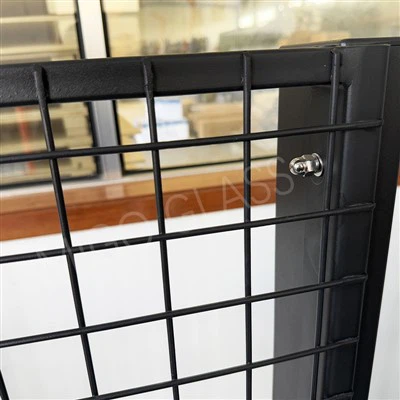
As the popularity of padel continues to grow across Europe, North America, the Middle East, and Asia, many investors are looking for a simpler way to purchase court systems. Instead of buying steel structures, tempered glass, artificial turf, lighting, and accessories from different manufacturers, more buyers now prefer sourcing a complete padel court system from one supplier. This approach not only saves time but also helps reduce project risks and improve installation efficiency.
Why Choose a One-Stop Supplier?
A complete padel court consists of many components that must work together precisely. These include the steel frame, tempered glass, artificial turf, LED lighting, fasteners, doors, and connection hardware. If these parts are supplied by different factories, dimensional differences or incompatible designs may create unexpected installation problems.
When one manufacturer produces or manages the complete system, every component is designed to match the others. Glass hole locations align perfectly with the steel frame, lighting brackets fit the structure correctly, and all accessories follow the same engineering drawings. This significantly reduces installation errors on site.
Another major advantage is communication. Instead of coordinating with several suppliers across different time zones, buyers only need to work with one project manager who oversees production, quality control, shipping schedules, and technical support.
What Should a Complete Supplier Offer?
Not every supplier claiming to provide a complete system actually manufactures all the major components. Before placing an order, buyers should confirm whether the supplier can provide:
- Steel structure manufacturing
- Tempered glass production
- Artificial turf supply
- LED sports lighting
- Stainless steel hardware
- Installation drawings
- Packing and container loading plans
- After-sales technical support
Some suppliers manufacture only steel structures and purchase glass or turf from third-party factories. While this is not always a problem, buyers should understand who is responsible for quality control and warranty if issues occur.
Project Example
A sports contractor in Chile originally purchased glass, lighting, and steel structures from three separate suppliers. Although each quotation appeared competitive, the project experienced delays because several glass panels required modification after arriving on site due to connector position differences.
For their second project, the contractor selected a supplier offering a complete padel court system. Since all components were engineered together before production, installation time was reduced by almost one week, and communication became much more efficient.
Questions to Ask Before Ordering
Professional buyers usually ask several key questions before choosing a supplier:
| Question | Why It Matters |
|---|---|
| Are all components compatible? | Prevents installation issues |
| Can you provide engineering drawings? | Ensures accurate installation |
| Do you offer replacement parts? | Simplifies future maintenance |
| What certifications are available? | Meets local project requirements |
| Can you customize the court? | Supports OEM and branding needs |
Beyond Product Quality
An experienced supplier should also help buyers with logistics planning, container loading, installation guidance, and technical documentation. These services may not appear on a quotation, but they often save significant time and money during project execution.
As international padel projects continue to increase in size, sourcing a complete court system from one reliable supplier has become the preferred procurement strategy for many contractors and distributors. Rather than focusing only on product prices, buyers should evaluate engineering capability, production consistency, and long-term service to ensure every project runs smoothly from factory to installation.