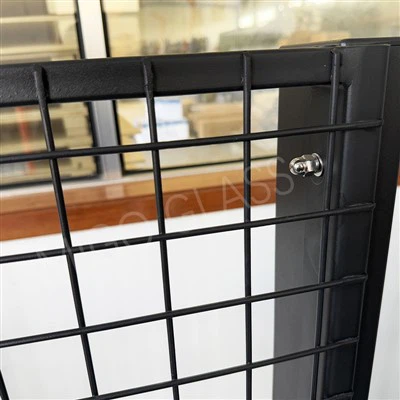
Although tempered safety glass is designed to withstand years of intensive play, there are situations where a glass panel must be replaced. Accidental impacts, installation stress, structural movement, vandalism, or spontaneous breakage can occasionally damage a panel.
The good news is that in most cases, only the damaged panel needs to be replaced. There is usually no need to replace the entire glass enclosure, provided the remaining panels and steel structure are in good condition.
This guide explains how to replace padel court glass safely, what should be inspected before installation, and how to ensure the new panel fits perfectly.
When Should Padel Court Glass Be Replaced?
Replace a glass panel immediately if you notice:
Cracks or shattered glass
Large edge chips
Deep impact damage
Delamination (for laminated glass)
Significant scratches affecting visibility
Permanent deformation of fixing holes
Damage caused by vandalism or heavy impact
Even if the glass remains in place, a damaged panel should never continue to be used in a commercial facility.
Step 1. Secure the Court
Safety is always the first priority.
Before starting any work:
Close the affected court.
Prevent players from entering the area.
Install warning signs or temporary barriers.
Remove loose glass fragments if safe to do so.
Wear appropriate personal protective equipment (PPE), including cut-resistant gloves, safety glasses, and safety footwear.
If the panel is severely shattered, use protective film or tape to help stabilize loose fragments before removal.
Step 2. Identify the Correct Replacement Glass
Before ordering a new panel, collect all relevant specifications.
Record the following:
Glass dimensions (height × width)
Glass thickness (10 mm or 12 mm)
Tempered or laminated construction
Number of countersunk holes
Hole positions and diameters
Edge finish
Corner radius
Glass tint or coating (if applicable)
For panoramic courts, every panel is manufactured to precise dimensions, so accurate measurements are essential.
Step 3. Inspect the Steel Structure
Before installing a replacement panel, inspect the supporting frame.
Check for:
Bent posts
Twisted beams
Loose anchor bolts
Corrosion
Foundation movement
Misaligned fixing holes
If the structure has been damaged, simply replacing the glass may not solve the problem. Any structural issue should be corrected first to prevent repeated failures.
Step 4. Remove the Damaged Glass
Using suitable lifting equipment:
Support the panel with vacuum lifters.
Loosen the fixing bolts gradually.
Remove bolts in a balanced sequence.
Lift the panel vertically.
Transport the broken glass to a safe disposal area.
Never drag glass across the ground or strike the edges with metal tools.
Large panoramic panels should always be handled by trained personnel using certified lifting equipment.
Step 5. Inspect Hardware and Accessories
Before installing the new panel, inspect all accessories.
Replace any components showing signs of wear, including:
Plastic conical washers
Rubber setting blocks
Spacers
Sleeves
Stainless steel bolts and nuts
Protective caps
Reusing damaged hardware can introduce unnecessary stress into the new glass panel.
Step 6. Install the New Glass Panel
Position the replacement panel carefully.
Ensure that:
Expansion gaps are maintained.
Glass does not touch the steel frame.
Countersunk holes align naturally.
Rubber setting blocks are correctly positioned.
Never force the panel into place. If alignment is incorrect, investigate the cause before tightening any bolts.
Step 7. Tighten Bolts Correctly
Insert all bolts loosely by hand first.
After confirming correct alignment:
Tighten bolts evenly using a diagonal sequence.
Use a calibrated torque wrench.
Follow the torque values recommended by the court manufacturer.
Avoid over-tightening, as excessive pressure around the countersunk holes is a common cause of future glass breakage.
Step 8. Perform a Final Inspection
Before reopening the court, verify that:
✔ The replacement panel is correctly aligned.
✔ Expansion gaps are uniform.
✔ No glass touches the steel structure.
✔ Plastic conical washers are installed.
✔ Bolts are tightened to specification.
✔ Glass surfaces are clean and undamaged.
✔ The surrounding structure remains stable.
Only after completing these checks should the court return to service.
Common Mistakes to Avoid
When replacing padel court glass, avoid these common errors:
Ordering glass with incorrect dimensions
Ignoring steel structure alignment
Reusing damaged hardware
Omitting plastic conical washers
Allowing direct glass-to-steel contact
Over-tightening bolts
Installing chipped or damaged replacement glass
A careful replacement process helps ensure the new panel performs as intended.
Can a Single Glass Panel Be Replaced?
Yes.
Most padel court systems are designed so that individual glass panels can be replaced without dismantling the entire court.
However, the new panel must exactly match the original in:
Dimensions
Thickness
Hole layout
Edge finishing
Corner radius
Glass specification
Precision manufacturing is essential for a successful replacement.
How to Order the Correct Replacement Glass
To ensure a perfect fit, provide your supplier with:
Technical drawings (if available)
Glass dimensions
Hole layout drawing
Panel identification number (if marked)
Court model (Classic, Panoramic, Super Panoramic, etc.)
Photos of the damaged panel and surrounding structure
Providing complete information helps avoid production delays and installation problems.
Why Choose Qingdao Migo Glass?
At Qingdao Migo Glass Co., Ltd., we manufacture precision-engineered replacement glass for a wide range of padel court systems.
Our capabilities include:
Custom-made replacement panels for most court brands
10mm and 12mm tempered safety glass
Optional Heat Soak Tested (HST) glass
Precision CNC-drilled countersunk holes
Fully polished edges and safety corners
Bird-Friendly Ceramic Frit Glass
CE, SGCC, and AS/NZS certified products
Fast production and worldwide shipping
Whether you need to replace a single broken panel or upgrade an entire court, our engineering team can manufacture glass to match your existing system accurately.