As pickleball continues to expand internationally, the number of companies offering court systems has increased rapidly. For overseas buyers, distributors, contractors, and sports facility developers, this creates more choice-but it also makes supplier evaluation more difficult.
A professional website, competitive quotation, or attractive product sample does not necessarily mean a manufacturer can consistently deliver complete commercial projects.
Choosing a reliable pickleball court manufacturer requires evaluating the company behind the product: its manufacturing capability, engineering experience, quality control, export knowledge, and ability to provide support when problems occur.
Verify Real Manufacturing Capability
One of the first questions buyers should ask is: What does the supplier actually manufacture?
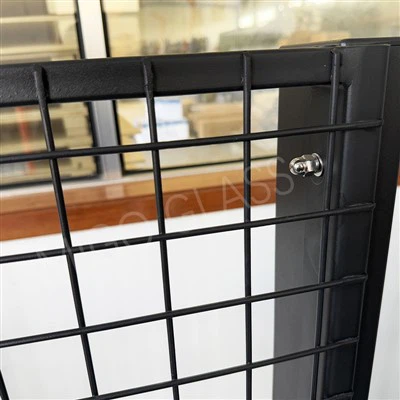
A complete pickleball court may involve steel structures, mesh fencing, tempered glass for premium designs, playing surfaces, LED lighting, and numerous hardware components.
Some suppliers operate their own production facilities, while others mainly assemble products purchased from different factories.
Outsourcing itself is not necessarily a problem. What matters is whether the supplier has effective control over:
- Material specifications
- Production tolerances
- Quality inspection
- Delivery schedules
- Component compatibility
Professional buyers often request factory videos, production photos, equipment lists, or on-site factory inspections before starting long-term cooperation.
Evaluate Engineering Capability
A reliable manufacturer should understand more than how to manufacture individual products.
International projects may involve different:
- Wind conditions
- Foundation requirements
- Climate environments
- Local regulations
- Court layouts
A supplier with an experienced engineering team should be able to provide technical drawings and adjust the court design according to actual project conditions.
For example, an outdoor project in a coastal region may require stronger corrosion protection and different structural considerations from an indoor facility.
If a supplier simply offers the same specification for every project without asking about location or application, buyers should investigate further.
Look at Quality Control, Not Just Samples
Samples can demonstrate appearance, but they do not prove that a factory can maintain the same quality across ten, twenty, or fifty courts.
Professional manufacturing requires repeatable quality control.
Buyers should examine whether the supplier checks:
- Raw material specifications
- Steel dimensions and welding
- Mesh wire diameter
- Surface coating quality
- Glass processing accuracy
- Hardware quantities
- Final packaging
The key question is not whether one sample is good. It is whether the supplier can deliver the same specification consistently across every production batch.
Review Real Project Experience
Previous project experience can reveal much more than a product catalogue.
Ask potential manufacturers about projects in markets similar to your own. A supplier experienced with Europe, North America, Australia, or the Middle East should understand different expectations regarding documentation, packaging, installation, and product standards.
Useful evidence may include:
- Completed project photos
- Customer references
- Repeat orders
- Export history
- Installation feedback
One distributor evaluating two suppliers found that both offered similar products and prices. However, one manufacturer could provide detailed records from previous multi-court projects, including production inspection, container loading, and installation documentation.
The buyer selected that supplier because the evidence demonstrated stronger project management experience rather than simply better marketing.
Check Export and After-Sales Capability
International procurement does not end when the container leaves the factory.
A reliable manufacturer should understand:
| Capability | Why It Matters |
|---|---|
| Export Packaging | Reduces transportation damage |
| Container Planning | Controls freight costs |
| Clear Labeling | Simplifies installation |
| Technical Documents | Supports local contractors |
| Spare Parts | Reduces future downtime |
| After-Sales Response | Helps solve unexpected issues |
Ask how the supplier handles damaged components, missing accessories, installation questions, or replacement parts.
The quality of the answer often reveals how experienced the company really is.
Do Not Choose on Price Alone
A very low quotation can be attractive, especially for multi-court projects. However, buyers should understand why the price is lower.
Differences may come from steel thickness, surface treatment, material grades, lighting components, packaging, or quality-control standards.
A reliable comparison should therefore use the same technical specification rather than comparing only the final quotation.
Final Consideration
The best pickleball court manufacturer is not necessarily the largest factory or the supplier offering the lowest price.
For overseas buyers, reliability comes from a combination of stable manufacturing, engineering knowledge, consistent quality control, proven export experience, and responsive after-sales support.
Before committing to a large order, take time to verify how the supplier works when something goes wrong-not only how the product looks when everything goes right.
A manufacturer capable of supporting the complete project lifecycle can help reduce procurement risk, simplify installation, and become a more valuable long-term partner as your pickleball business grows.