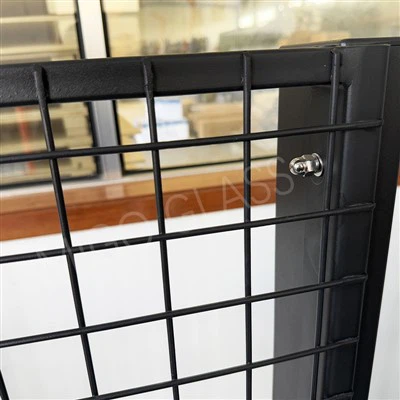
✅ Three Key Installation Control Points for Padel Court Glass
(For padel court builders, installers, and padel court construction professionals)
When installing tempered glass for padel court construction, three technical factors must be strictly controlled. These elements determine the long-term performance and safety of padel glass panels, and are among the most important issues for anyone involved in padel court design or installation.
1) 🔹 Glass Diagonal Tolerance
(Important for padel court safety standards)
The tempered glass panels used in professional padel courts must remain perfectly rectangular. Poor diagonal tolerance affects how the panel sits in the frame and creates hidden stress points.
Why it matters
Uneven edge contact
Localized stress concentration
Vibration from ball impact increases internal stress
May lead to spontaneous breakage - a common issue reported in padel court maintenance
Recommended tolerance
For common 1995×2995mm padel glass panels → diagonal tolerance ≤ 2 mm
Installation requirements
Measure both diagonals on site
Ensure the frame is square before installation
Never force-fit out-of-spec tempered glass
2) 🔹 Expansion Gap
(Critical for padel court durability)
A proper expansion gap must exist between the glass and steel frame to accommodate thermal movement. This is a basic requirement in professional padel court materials guidelines.
Recommended gap
5–10 mm on each side
(Adjust for climate, especially in Middle East / Europe / South America padel projects)
Required materials
EPDM rubber pads / profiles - widely used in premium padel court manufacturing
Practices to avoid
Installing glass too tightly
Using hard fillers
Allowing direct glass-to-steel contact
These mistakes frequently appear in low-budget padel court installations and often cause cracking.
3) 🔹 Number of Fixing Points
(Key to padel glass stability)
The number and placement of fixing points directly influence stability and vibration resistance - a critical requirement in any padel court installation guide.
Recommended configuration
6 fixing points per tempered glass panel
(Aligned with upper, middle, and lower structural supports)
Why you should not over-fix the glass
More fixing points = more stress points
Structural deformation transfers stress into the glass
Correct principle
Fixing points must align with structural support
A central fixing point is essential for absorbing vibration
🧩 How These Three Factors Work Together
| Issue | Most Likely Cause |
|---|---|
| Glass shaking or noise | Too few fixing points |
| Edge chips or powder | Expansion gap too small → compression stress |
| Spontaneous breakage | Poor diagonal tolerance + no expansion gap + over-fixing |
These are the top causes of failure reported by padel court suppliers and padel court builders worldwide.
🔧 Five Non-Negotiable Rules for Court Builders
Diagonal tolerance must be ≤ 2 mm
Frame must be square
Leave 5–10 mm expansion gap
Use 6 fixing points per panel
Never allow metal-to-glass contact
https://www.migocourtglass.com/