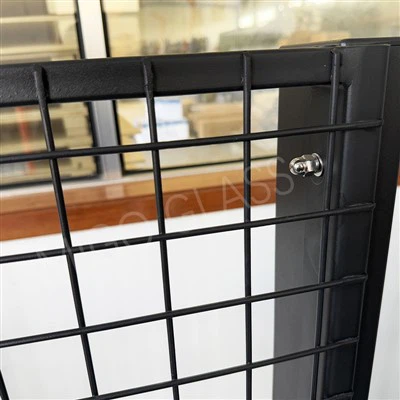
Glass thickness influences much more than the strength of an individual panel. It also affects the engineering design, structural calculations, and installation requirements of the entire padel court system.
Choosing between 10mm, 12mm, and 15mm tempered glass should be based on project requirements rather than cost alone.
Structural Considerations
As glass thickness increases, the overall weight of each panel also increases. This places higher demands on:
- Steel frame strength
- Glass connector capacity
- Foundation design
- Anchor bolt performance
- Installation equipment
For this reason, thicker glass is often paired with reinforced structural components.
Glass Thickness Comparison
| Glass Thickness | Typical Application | Engineering Consideration |
|---|---|---|
| 10mm | Standard recreational courts | Lower structural load |
| 12mm | Commercial clubs | Better rigidity and durability |
| 15mm | Premium panoramic courts | Higher structural strength and heavier support system |
Installation Requirements
Heavier glass panels require:
- More accurate alignment
- Heavy-duty connector systems
- Proper expansion gaps
- Higher lifting capacity
- Careful installation sequencing
Even minor alignment errors become more difficult to correct when working with 15mm glass.
Project Planning
During the design stage, engineers normally evaluate:
- Wind load
- Glass deflection
- Structural stability
- Connection details
- Long-term maintenance
These factors work together to determine the most suitable glass specification for the project.
Industry Trend
As premium padel facilities continue to expand across Europe, the Middle East, and North America, more developers are viewing glass as an engineered structural component rather than simply a court enclosure.
The most successful projects balance glass thickness, steel structure, connector design, and installation accuracy to achieve the highest level of safety, durability, and playing performance over the life of the court.