Padel Court Market: Explosive Growth from Niche to Popular
In the past two years, padel has become the "new favorite" in the sports world. This sport has simpler rules than tennis and a larger court than squash. It can be played by two or four people, making it perfect for young people's gatherings or family activities. Its popularity has been rising steadily. With this comes a boom in padel court construction, and the market demand has obviously grown.
Looking at the market distribution, padel courts were initially mainly found in high-end gyms and private clubs in first-tier cities. Now, they are gradually expanding to communities, commercial complexes in second and third-tier cities. Even some resorts and schools have started planning and building them. Investors are attracted by its "low investment, quick returns" feature - a standard padel court is less than half the size of a tennis court, the initial decoration and equipment costs are relatively manageable, and the customer flow is stable. Many people in the industry say that the number of customers consulting about building courts has nearly doubled compared to last year, and the market is still heating up.
But despite the bustling market, many buyers who are new to padel court construction often feel confused when preparing materials and easily make mistakes in details.
Easy-to-Ignore Procurement Point: Glass Must "Fit the Environment"
Among the construction materials for padel courts, the surrounding glass is crucial. It has to withstand repeated ball impacts and ensure players' safety. However, many buyers only look at the price and thickness when choosing glass, completely ignoring the usage environment - which plants hidden troubles.
Climatic conditions vary greatly in different regions, so the glass must adapt to these differences. For example, in coastal areas like Guangdong and Hainan where typhoons often hit, ordinary tempered glass would easily break if hit by strong winds carrying debris. This not only costs a lot of money to repair but also may hurt players. In such cases, laminated glass is a better choice. It has a layer of film in the middle. Even if the glass breaks, it will stick to the film and won't fall off to hurt people. Its wind resistance is also much stronger than ordinary glass.
Another example: in cold areas like Northeast China and Inner Mongolia, the temperature can drop to tens of degrees below zero in winter. Ordinary glass may crack due to thermal expansion and contraction, so special glass with good frost resistance is needed. In windy and sandy areas in the northwest, the glass surface must have a wear-resistant coating. Otherwise, it will be scratched by sand and dust soon, affecting visibility. Ignoring these details will bring endless troubles to the later operation of the court.

Customer Case: From Single Glass to Complete Procurement Solution
Migo Glass is an experienced brand in padel court glass. Not long ago, they met such a customer. This customer planned to build an outdoor padel court in Xiamen, Fujian. At first, he only asked about the price of glass. Halfway through the conversation, he suddenly asked, "Besides glass, do you have matching fences and nets here? I've checked several stores, but either the sizes don't fit, or the quality varies a lot. It's really troublesome."
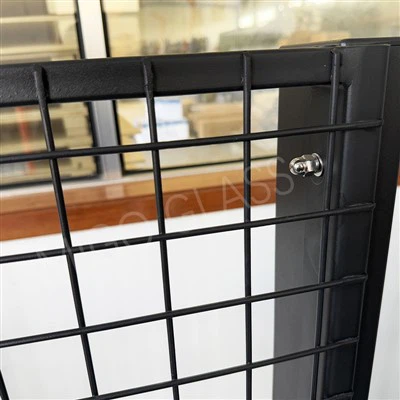
This question made Migo Glass's team realize that many customers are building padel courts for the first time and have no idea what accessories a complete court needs - apart from glass panels, there are high-strength fences, anti-slip floor materials, durable nets, and even small items like scoreboards and rest chairs. Purchasing from different suppliers not only takes a lot of time to compare prices and communicate but also may lead to incompatible accessories. For example, the gap between the glass and the fence is too big, which affects the user experience.
To solve this problem, Migo Glass quickly launched a complete padel court procurement solution. Customers just need to tell their venue location (e.g., whether it's a typhoon-prone area or a cold area), venue size and budget. The team will recommend suitable glass types and match all accessories - from large items like fences and floor materials to small ones like scoreboards and nets - all can be provided in one go.
The Xiamen customer directly ordered this solution. After the court was built, he specially gave feedback: "I thought I had to contact five or six suppliers to build a court, but now it's done in one go. Moreover, the laminated glass Migo Glass chose for me survived a typhoon perfectly. The fence and glass fit tightly together. It's so worry-free." Now, more and more customers actively choose this one-stop procurement method, which not only avoids missing items but also ensures the overall quality of the court.