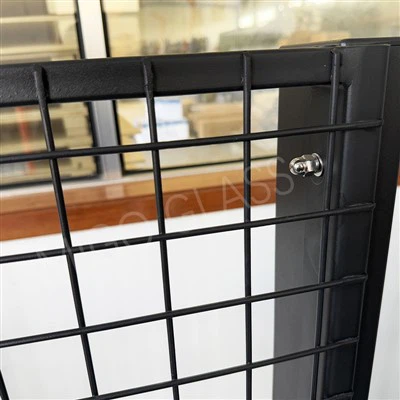
In modern stadiums and various sports venues, glass is an important building material, and its quality and performance have a vital impact on the use experience of the venue. As one of the best, court glass has a wide variety of types and different functions, suitable for different sports.
First of all, from the material point of view, court glass can be divided into ordinary float glass, tempered glass and laminated glass. Ordinary float glass has high transparency, but low strength and safety, and is suitable for places where glass performance requirements are not high. Tempered glass has greatly improved its strength through a special heat treatment process. Once broken, it will only form small particles to reduce damage. It is suitable for basketball, tennis and other sports venues with strong confrontation. Laminated glass is made of two or more pieces of glass with PVB film in the middle. Even if the glass is broken, the fragments will adhere to the film and will not splash and hurt people. It is common in places with extremely high safety requirements.
In terms of function, court glass also has many categories. Ordinary glass is mainly used for basic isolation and light transmission functions, while Low-E glass uses a special coating process to reduce the thermal conductivity of glass and improve thermal insulation performance. It is suitable for cold areas or venues that require energy saving. In addition, there are soundproof glass, bulletproof glass, etc., which are specially treated for different needs.
In terms of color, court glass also has a variety of options such as transparent, brown, and blue. Transparent glass can provide the best visual effect, while brown and blue glass can reduce light reflection to a certain extent and protect the eyesight of athletes.
Different types of court glass vary in performance, use and price. When choosing, it is necessary to weigh the specific usage needs and budget to ensure the safety, comfort and practicality of the venue.