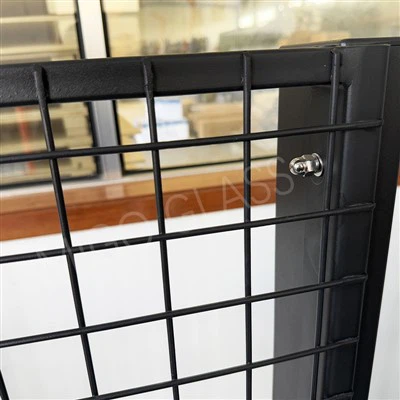
Glass structures are becoming more prevalent in the construction of modern squash courts. Whether utilised as leisure facilities or completely enclosed glass courts for important tournaments, glass is critical to assuring player safety, improving spectator experience, and maximising performance. This page includes a complete description of the many types of glass used in squash courts, as well as important industry standards and uses in a variety of circumstances.
1. The Use of Glass in Squash Courts
The glass walls of squash courts are not only practical but also visually appealing. From a practical aspect, glass walls improve ball rebound effects, making matches simpler to manage and fluid. Visually, glass offers spectators clear vistas while providing a contemporary, open atmosphere. Glass is very significant in professional squash competitions. All-glass courts provide fans with a 360-degree panoramic vision while also giving broadcasters greater camera options for live broadcasts.
2. Materials for Squash Court Glass
2.1 Tempered glass
The most frequent material used in squash courts is tempered safety glass, which has a thickness of around 12 millimetre. It is made by heating conventional annealed glass to 600 degrees Celsius and swiftly cooling it. When exposed to external pressures, this action greatly strengthens the glass and changes its fracture pattern.
Tempered glass has various benefits:
High impact resistance. Tempered glass can withstand high-speed ball impacts and accidental collisions between players, ensuring stable and reliable performance.
High Safety: If broken, it shatters into small spherical pieces, reducing the risk of injury.
Durability: Scratch-resistant, can withstand heavy foot traffic and adapt to changing weather conditions.
2.2 Laminate Glass (Optional Use)
For projects requiring high safety and good sound insulation, laminated glass is a good choice. Laminated glass consists of two or more layers of glass with a layer of film sandwiched between them, which are fused together under high temperature and pressure. If the glass breaks, the film will hold the fragments together, preventing them from scattering.
3. Industry Standards and Certifications.
(1) European standard EN12150 for heat-strengthened safety glass specifies the minimum edge quality, fragment size after breakage and impact resistance of glass.
(2) ASTM C1048 and ANSI Z97.1 (USA) apply to safety glass such as laminated glass and tempered glass. These standards are commonly used for the installation of squash courts in North America.
(3) World Squash Federation (WSF) guidelines: The official rules include court size, wall reflectivity, glass material, safety rules, etc. Glass walls must meet the following conditions:
• Allow the ball to always bounce.
• Ensure sufficient light transmission
• Prevent breakage due to player impact.
• Be treated to reduce surface reflection by anti-reflective coating, etc.
4. Key Applications for Squash Court Glass
The arrangement of squash court glass changes based on a number of criteria. These criteria include competition level, venue location, and audience demands.
4.1 Back Wall
Most squash courts have glass back walls so that spectators may see the play well. A common back wall arrangement consists of:
* Two to four tempered glass panes with a thickness of 12 mm
* Glass doors should be flat with the wall and have a safe mounting system (e.g., metal frames or seam connectors).
4.2 Exhibit Courts
In certain especially significant matches, courts with four sides totally constructed of glass are utilised. Construction of this sort of stadium employs:
* Tempered glass panels are carefully designed.
* Simple frames or stainless steel connections provide a robust and visually beautiful construction.
Because of its portability, all-glass courts are suitable for temporary installations, such as promoting squash in public venues such as shopping malls, museums, and squares.
4.3 Training and Club Courts
Traditional rear glass wall designs are commonly used for recreational training courts in clubs and schools, sometimes with frosted finishes to provide privacy. In such cases, light transmission and mobility are less important than the glass's durability and cost-effectiveness.
5. Installation and Maintenance Guides
5.1 Installation Tips
When installing, ensure that the glass panels are spaced properly, and that elastic joints are installed to accommodate thermal expansion and contraction, as well as vibration due to movement. It is suggested that frames and connections be made of corrosion-resistant materials. Furthermore, all glass edges should be polished to decrease stress concentration and the likelihood of breaking.
5.2 Best Practices.
Water stains may be removed from the glass surface with routine care by wiping it with a gentle, non-abrasive cleanser. Regularly check the gaskets for ageing or loosening and the glass edges for fractures or damage to guarantee safety. Please be aware that the special coating and lustre of the glass surface may be harmed by the use of powerful alkaline cleansers.
Use a gentle, non-abrasive solution to clean the glass surface during routine maintenance to avoid water stains. Regularly check the gaskets for ageing or loosening and the glass edges for fractures or damage to guarantee safety. Please be aware that the special coating and lustre of the glass surface may be harmed by the use of powerful alkaline cleansers. Please think about this.
Conclusion
Choosing the correct materials and design-whether tempered glass or high-quality panels particularly intended for the game-is critical. Whether you are building a court for a club or designing a venue for world-class competitions, understanding the quality and uses of squash court glass is essential to providing the best experience for players and spectators.